Skip to content
Episode 341:05:23

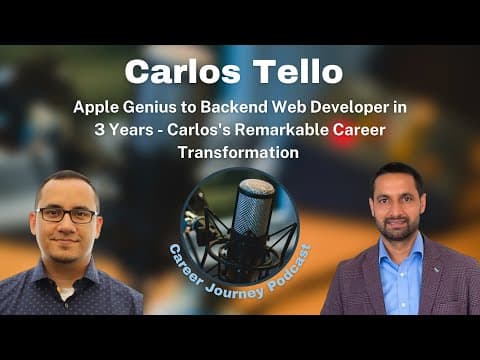
Nick Pickering Journey From Unpaid Intern to Senior Architect (Ep 34)

About Nick Pickering Journey From Unpaid Intern

Nick Pickering is a software engineer with over 10 years of experience who has worked as an architect and engineering lead across finance, HR, and healthcare industries. He currently works as a contractor/freelancer with expertise in .NET and SQL Server, while also running a mentorship program helping developers at all stages of their careers.

Episode Summary

  • Nick shares his unconventional career journey from unpaid intern to senior architect, including an 8-year path to completing his bachelor's degree while working full-time.
  • He discusses his transition from traditional employment to freelancing and contracting, and how the isolation led him to start mentoring other developers.
  • The episode covers Nick's mentorship program where he works one-on-one with developers, helping them overcome imposter syndrome and information overload.
  • Nick emphasizes the importance of exploring different technology paths beyond just web development and Python, sharing his experience across multiple tech stacks and industries.
  • He describes working with diverse mentees internationally, including someone interested in site reliability engineering and a developer with memory loss challenges.

Key Takeaways

  1. Career paths in software development don't have to be linear - taking breaks, switching directions, and exploring different industries can lead to valuable experience and expertise.
  2. Combat information overload by working with a mentor who can help create a custom curriculum focused on your specific goals rather than trying to learn everything available online.
  3. Consider exploring beyond popular paths like web development and data science - there are many opportunities in mobile development, game development, desktop software, and specialized fields like DevOps.
  4. Helping others can be a natural progression for experienced developers - teaching and mentoring can provide fulfillment while building a community around your expertise.
  5. Freelancing can provide flexibility and good income, but consider the isolation factor and actively build community connections to avoid loneliness.

Productivity & Success Habits

Nick Pickering's approach to productivity centers around personalized, focused learning and systematic problem-solving. Throughout his career journey, he developed a methodology he calls the "last mile approach," drawing from mail delivery services. As he explains, "there are so many resources out there for someone to become a software developer... but the Gap that I'm feeling is people who aren't sure what they need who aren't sure where they're going necessarily." His productivity strategy involves working one-on-one with people to eliminate information overload and create custom curriculums that avoid "any kind of fluff or unnecessary content."

Pickering's time management reflects his commitment to global accessibility, noting "I have a habit of actually talking to people at 2AM... I talk to people all over the world and I'm always working so I'm constantly taking calls and learning from people." This flexible scheduling allows him to serve clients across different time zones while maintaining his core principle of personalized attention. His approach to career development emphasizes patience and strategic progression - he took eight years to complete his bachelor's degree while simultaneously building practical experience, demonstrating that non-linear paths can lead to success when combined with consistent effort and adaptability.

Notable Quotes

"A lot of developers experience imposter syndrome they feel like they're not contributing to the team or to the company and they need help seeing understanding the business aspects of software development so that they can see that value that they actually provide"

Nick Pickering Nick explains why he started mentoring developers and the core problem he helps them solve.

"There's a lot of material out there on the internet a lot of developers you know you can study online for free all everything that you need in order to become a programmer but information overload becomes a factor and you're not sure which resources you ought to focus on"

Nick Pickering Nick describes the challenge of self-taught developers having too many learning options without guidance.

"I worked my way up the ranks there at the company from an unpaid intern up to senior web Architect by the time I was done with the company"

Nick Pickering Nick shares his career progression at his first web development company while still in university.
Episode transcript
[0:00] welcome to Career Journey podcast I got
[0:02] connected with Nick on Twitter I saw
[0:06] he's doing a bunch of the courses and
[0:08] mentorship for programmers I thought
[0:11] it's it's a perfect match let's bring
[0:13] what Nick offer to the people and then
[0:16] your stories and how you manage your day
[0:19] so that's what I wanted to cover with
[0:22] that over to Nick so yeah so I'm a
[0:25] software engineer I've been developing
[0:27] software for over 10 years I've worked
[0:30] as a architect and uh engineering lead
[0:33] across several different Industries and
[0:35] finance HR Healthcare and along the way
[0:39] I've worked with a lot of Junior
[0:40] developers growing developers I myself
[0:42] was a growing developer surrounded by
[0:45] other Developers for drawing and I found
[0:48] I had a knack for helping people build
[0:50] the confidence and skills they needed to
[0:54] progress in their career to where they
[0:55] felt comfortable working as a software
[0:57] developer a lot of developers experience
[0:59] imposter syndrome they feel like they're
[1:01] not contributing to the team or to the
[1:03] company
[1:05] and they need help seeing understanding
[1:08] the business aspects of software
[1:09] development so that they can see that
[1:11] value that they actually provide so how
[1:13] do I help developers now I have a
[1:15] mentorship program where I work
[1:16] one-on-one with developers people who
[1:18] are learning to code people who are
[1:19] searching for jobs or hoping to start
[1:22] freelancing careers trying to find
[1:24] clients
[1:25] and I work with them through the
[1:28] different challenges that that presents
[1:29] there's a lot of material out there on
[1:33] the internet a lot of developers you
[1:34] know you can study online for free all
[1:37] everything that you need in order to
[1:39] become a programmer but information
[1:41] overload becomes a factor and you you're
[1:43] not sure which resources you ought to
[1:45] focus on you get stuck in a particular
[1:47] way and there's no there's no one to
[1:49] reach out to to help to help you get
[1:51] through it or to understand whether it
[1:53] actually needs to be gone through like
[1:55] there's there's a lot of different
[1:56] variation in paths into software
[1:58] development so one of the questions you
[1:59] ask was what type of software developers
[2:01] do I help I help all types of software
[2:04] developers like I mentioned my
[2:07] background is I've been in a lot of
[2:08] different types of companies I've worked
[2:10] with a lot of different types of
[2:11] Technology I've been in web development
[2:12] I've done game development I've done
[2:14] Android and iOS app development desktop
[2:18] and server software I've been across the
[2:20] board and one of the things that I like
[2:22] to do as someone in this space of
[2:24] helping people learn to code is make
[2:26] people aware of the options that are
[2:28] available to them
[2:29] a lot of people assume web development
[2:32] especially self-taught developers they
[2:34] assume web development or they assume
[2:36] Python and data science those are great
[2:38] career paths but there are a lot of
[2:40] options available to you so you can
[2:41] explore these different types of jobs
[2:44] these different type of roles
[2:46] and find what best best fits for you
[2:50] and I can help you build a custom
[2:53] curriculum to study just what you need
[2:57] in order to get into a job or to help
[2:59] find your first clients with that
[3:01] specular skill set it's been really fun
[3:03] I've been doing this for about a year
[3:05] now just about a year and meeting lots
[3:08] of different kinds of people and a lot
[3:09] of different backgrounds all over the
[3:11] all of the world internationally in
[3:13] India Africa Europe the US Canada
[3:16] there's a lot of different people all
[3:18] over the world with different scenarios
[3:20] different things that they want
[3:21] different types of skills that they're
[3:23] interested in learning and just helping
[3:25] them move forward in the directions that
[3:26] they want to go in so Nick one thing
[3:28] that I I guess I missed that from the
[3:32] reading from profile and your website
[3:34] that you are still working at mind me
[3:36] asking where do you work and what are
[3:39] the current technology that you're using
[3:40] I currently work in Contracting
[3:43] freelancing
[3:45] sort of way so I have a couple clients
[3:47] that I help write code for okay
[3:49] primarily my tech stack is.net and SQL
[3:53] Server yeah it's a it's a great Tech
[3:57] stack um I really enjoy it so that's
[3:59] that's my current Forte but I also have
[4:02] a lot of experience in PHP in my Sequel
[4:05] and JavaScript and node.js and all these
[4:08] different web development Technologies I
[4:09] also have a lot of experience in Python
[4:11] and Android development I have dabbled
[4:13] in some game development in C plus plus
[4:15] and other different Technologies there's
[4:17] a lot of a lot of modern development
[4:18] engines for game development that are
[4:20] really interesting so yeah my experience
[4:22] is a bit all over the place but
[4:23] currently I take my forte is in.net and
[4:25] you have 18 years total right about 18
[4:28] years now it's just 10. so for 10 years
[4:30] that's a lot I get around yeah yeah it's
[4:34] not like um you mentioned before the
[4:37] call today that you you like telling
[4:39] stories of people's whose careers have
[4:40] winded around and aren't quite sure what
[4:43] uh Direction they want to take and
[4:44] that's that's been my story I'm dabbling
[4:47] in everything I'm taste testing all
[4:49] these different things and I've gained
[4:51] so much knowledge that I found that now
[4:53] I really want to help other people
[4:54] four and and find what their specific
[4:57] space is with what what they would most
[4:59] enjoy doing
[5:03] nine to five job
[5:05] or have you done a nine to five job and
[5:08] then switched to
[5:09] um Contracting and freelancing yeah so I
[5:13] I started I'll go I'll go with my
[5:15] educational background and sort of how
[5:17] all this got started now let's go with
[5:19] that too
[5:20] um so I
[5:22] I started actually in high school
[5:24] learning to write code
[5:27] um I I always as a kid I'd really
[5:30] enjoyed video games I as a kid I was
[5:32] studying how they worked and taking them
[5:34] apart and learning uh learning all the
[5:37] different hacks and things that can go
[5:38] on in a video game
[5:40] and when I got into high school I was I
[5:43] was initially set on becoming a musician
[5:44] and I decided that it wasn't quite the
[5:47] lifestyle that I was looking for so I
[5:49] remembered my passion for for gaming and
[5:52] software technology and I started
[5:54] learning to code through an application
[5:57] called Alice and this was a tool
[6:01] developed by an MIT Professor called or
[6:04] not MIT Carnegie Mellon his name was
[6:07] Randy Posh and he has a really great
[6:08] story if you haven't heard of him
[6:11] he's worth going to check out but he
[6:12] developed this application called Alice
[6:14] that
[6:16] teaches kids and college students how to
[6:19] build how to build how to write code but
[6:23] also to build animations and build 3D
[6:26] models and things like this nature
[6:28] I really enjoyed that and that sort of
[6:30] sparked off my studying all the
[6:31] different software development languages
[6:33] I studied c i studied C plus plus and in
[6:36] Python
[6:38] I decided to go to a community college
[6:41] at my local Community College Study
[6:43] computer science there founded knack for
[6:45] tutoring and mentoring other students I
[6:49] was the type to stay up all night
[6:50] reading through the back chapters of the
[6:53] textbooks just because I was enjoying it
[6:54] so much you know chapters we wouldn't
[6:56] actually cover in class
[6:57] and a lot of a lot of people enjoyed
[6:59] working with me like helping them get
[7:01] caught up on the different aspects of
[7:03] object-oriented programming and these
[7:06] different things
[7:08] um so I went to college to study
[7:10] software development and uh
[7:13] I eventually moved from Community
[7:15] College to University uh to earn my
[7:18] four-year bachelor's degree
[7:21] and my experience at University was very
[7:23] Rocky
[7:24] I got started and found it was very
[7:28] challenging there were a lot of
[7:30] different courses that didn't apply
[7:32] directly to
[7:34] software development I was very good I
[7:36] was very naturally good at software
[7:37] development and I was helping lots of
[7:39] different people and then I got stuck in
[7:40] some courses that were not my forte at
[7:43] all and they became a barrier to me
[7:45] actually finishing my degree
[7:47] because that's part of the the bachelor
[7:49] degree you have to do all those exactly
[7:52] yeah yeah there was there were some um
[7:54] there were some requirements for the
[7:56] degree that were fairly difficult for me
[7:58] and I was
[8:00] as I transitioned from Community to
[8:02] University at the same time I landed
[8:04] myself an internship at a web
[8:06] development company a very small company
[8:08] with about four developers in total
[8:12] and I worked my way up the ranks there
[8:16] at the company from an unpaid intern up
[8:20] to senior web Architect by the time I
[8:22] was done with the company
[8:25] um and
[8:27] it was very interesting times uh those
[8:30] days I
[8:31] was
[8:33] studying on and off at University I had
[8:36] run into some trouble with some courses
[8:38] and had to take a break from school for
[8:40] a semester or two I would go in full
[8:42] time for work and then after a year or
[8:45] so I decided I was going to tackle it
[8:47] again and go back into University and go
[8:49] for the courses and at this point I had
[8:51] developed a reputation with the web
[8:53] development company to the point where
[8:55] I'd actually had a key to the office
[8:58] building and I would essentially go back
[9:02] and forth between the office building
[9:03] and classes
[9:05] to get my work done that I need to get
[9:08] done but also get the schoolwork that I
[9:09] need to get done
[9:12] so that was very busy very chaotic times
[9:16] I finished my bachelor's degree at
[9:18] University finally after a total of
[9:20] eight years
[9:22] from from start to finish it took eight
[9:25] years to finish the degree
[9:27] and at that point I
[9:30] started looking for
[9:32] you know a little bit higher pay work I
[9:35] had a wife we were planning kids soon
[9:37] and so we were looking for a little bit
[9:38] better a little bit better work
[9:41] environment
[9:43] I ended up planning a job a full-time
[9:46] job at a HR and payroll software company
[9:49] they developed
[9:52] they primarily developed tax assistance
[9:55] software so they would build software
[9:57] that could help manage
[9:59] manage and automate
[10:01] business tax calculations
[10:04] and manage filing forms to the
[10:07] governments and they had very
[10:09] um a very wide Suite of software to help
[10:13] collect data from employees that were
[10:16] necessary to populate tax forms and then
[10:18] automatically send those tax forms to
[10:20] the relevant government agencies and
[10:22] very very elaborate very complex
[10:24] processes um
[10:26] had a lot of fun working there worked my
[10:29] way up
[10:30] to an engineering lead there at the
[10:32] company
[10:34] okay
[10:35] worked in
[10:37] um worked on every single team at the
[10:40] company uh like I like bouncing around
[10:42] so I I the first team I worked with I
[10:46] I Grew From a developer to in to
[10:49] eventually leading that team
[10:51] and then I was asked to like bring my
[10:54] services over to a new team who was
[10:55] struggling a bit and so I took my took
[10:59] my perspective there started working
[11:01] with Junior developers and figuring out
[11:03] what the core problems were
[11:05] with the product itself you know the
[11:07] actual software and you know the Team
[11:09] Dynamics and so forth as I I end up
[11:12] learning a lot from that experience of
[11:13] switching around between teams and
[11:15] figuring out all kinds of different
[11:16] personalities and how they fit together
[11:18] and how you can sort of guide people to
[11:21] getting results uh from a from a
[11:24] business from a professional perspective
[11:26] but also like a personal perspective
[11:28] like feeling like you did good work
[11:29] during the day
[11:32] um
[11:33] right and so from there I I sort of got
[11:36] around and and made my mark on all the
[11:39] different pieces of the company and
[11:41] decided I was going to go out and take a
[11:44] big challenge for myself I I felt like
[11:46] I'd reached the ceiling there at the
[11:48] company
[11:49] and so I ended up working with a coach
[11:52] um to figure out what my next step would
[11:54] be because I had no idea I didn't know
[11:55] like I I was very well respected at this
[11:59] company and a lot of people I were
[12:01] talking to a lot of my friends at the
[12:02] company were like you're crazy too
[12:05] to go anywhere else like this is this is
[12:07] the perfect position for you everyone
[12:10] um you're very well respected and you're
[12:11] very well
[12:13] um positioned to to do big here
[12:16] but I felt like I had some bigger
[12:18] challenge to face
[12:20] um so I ended up working with a coach
[12:21] and finding
[12:25] cancer research as a topic of Interest
[12:29] and I actually spent a year while still
[12:31] working with the the HR and payroll
[12:33] Finance Company studying cancer research
[12:37] I eventually transitioned out to
[12:40] part-time with the with the company
[12:41] while I continued to study cancer
[12:44] research and try to find an angle for me
[12:46] to
[12:47] contribute to cancer research and cancer
[12:50] drug development
[12:53] I ended up finding work with a
[12:55] Healthcare Company
[12:56] who
[13:00] who had some experience improving
[13:03] clinical trials they were working on
[13:05] technology advanced AIS and advanced
[13:09] data analytics software to help improve
[13:13] the process of finding
[13:15] finding candidates for clinical trial
[13:17] drugs when was this when was this
[13:21] company
[13:21] it was about a year and a half ago okay
[13:25] recently because you said Ai and all
[13:28] yes yeah yeah there's definitely there's
[13:31] definitely AI involved with the company
[13:33] um a lot of a lot of raw data analytics
[13:35] a lot of Big Data
[13:37] um
[13:38] processing data from lots of different
[13:40] sources and combining it and putting it
[13:43] in a way that can be processed into
[13:45] meaningful analytics is a big part of
[13:47] what the company does
[13:49] um
[13:50] and yeah and so I was working with that
[13:54] company for for a while and and so I I
[13:57] was working with that company for a bit
[13:59] and at the same time I had got the itch
[14:02] to sort of test my test my Merit at
[14:05] starting my own business and so I
[14:09] started working with
[14:11] a couple different companies in a
[14:13] Contracting freelancing capacity just
[14:16] helping them
[14:17] make progress on their development help
[14:20] augment their development teams and
[14:22] just raw software development nothing
[14:25] too nothing too crazy
[14:28] I
[14:30] found myself missing because I was
[14:33] networking as a freelancer I was working
[14:34] alone I was working sort of
[14:37] um
[14:37] directly on software all day not really
[14:39] working with a ton of people not really
[14:40] in a leadership capacity or really even
[14:43] in the team capacity it was very much it
[14:45] was very lonely being a freelancer
[14:49] um
[14:50] so I decided to start building a
[14:52] community and start teaching software
[14:54] development and start teaching the
[14:56] business of software development
[14:58] and I wasn't sure exactly which
[14:59] direction I was going am I going to am I
[15:02] going to work with new developers and
[15:04] become sort of a teacher Mentor am I
[15:07] going to
[15:09] start a boot camp or am I going to start
[15:12] training programs
[15:15] and effectively I'm still at a point
[15:17] where I'm exploring those different
[15:18] concepts okay I've I've mentored a lot
[15:22] of people paid in free to different
[15:26] capacities
[15:27] helping developers build a curriculum
[15:30] for
[15:32] what they want to do with their careers
[15:36] I really enjoyed working with one
[15:38] particular student who
[15:40] was really interested in site
[15:42] reliability engineering this is
[15:44] something that I hadn't really deeply
[15:45] explored myself the field of devops and
[15:48] sres
[15:50] and so I had to learn a bit to be able
[15:52] to help her move forward in the
[15:55] direction that she wanted to go
[15:56] so that was particularly interesting
[15:59] um
[16:00] student and I also ended up working with
[16:02] a student who suffered from a pretty
[16:06] severe memory loss condition
[16:09] the student had a lot of great technical
[16:11] skill and they really wanted to start a
[16:13] freelancing business
[16:14] they wanted to do software development
[16:16] for companies as a freelancer
[16:18] and so that was just a really
[16:20] interesting interesting person to get to
[16:23] know and to help move forward with the
[16:25] different challenges that they have
[16:27] [Music]
[16:30] to to
[16:31] becoming productive and and starting
[16:34] reaching their goal of becoming a
[16:36] software developer
[16:37] [Music]
[16:39] and so to to summarize the the question
[16:43] the initial question I think sort of the
[16:45] the winding career how did I get started
[16:48] here and how did I come up to where I am
[16:51] I I
[16:52] always knew I enjoyed software
[16:55] development and I from a young age I
[16:58] felt like I had a good knack for it I've
[17:00] always sort of been good at mentoring
[17:01] and teaching and and I I feel like my my
[17:05] strong suit is I I'm a great listener I
[17:07] can help I can help listen to your story
[17:10] and advise ways to sort of overcome
[17:13] challenges or you know sometimes people
[17:16] just need someone to listen to they
[17:17] don't really need a solution
[17:21] [Music]
[17:22] um and now I've gone all over the place
[17:26] I've worked in all kinds of different
[17:27] Technologies all kinds of different
[17:29] companies all kinds of different
[17:30] capacities
[17:31] and I've got a lot of experience in the
[17:33] wide range of things
[17:35] and so I feel like I can use that sort
[17:38] of
[17:39] raw
[17:41] raw skill that I have that I feel like
[17:43] that comes naturally to me is because
[17:45] being someone who can mentor and teach
[17:47] and and train
[17:49] and my goal now is to sort of make make
[17:53] a career of that
[17:55] that's that's the direction I'm moving
[17:57] in currently
[17:59] that's perfect so thank you so much for
[18:02] sharing this this this is the part that
[18:04] I love about this career Journey podcast
[18:06] that it's just 20 minutes that we are
[18:09] talking and I know a lot about you and
[18:12] uh your inspiring journey I have a page
[18:14] full of notes right
[18:17] um
[18:18] wow
[18:19] so so you when you was in high school
[18:22] game development then Community College
[18:27] then uh University
[18:29] then a internship that you work so hard
[18:34] that they gave you
[18:36] um a full-time job then Senior then the
[18:39] keys of the building
[18:41] and then you talk about a coach I I miss
[18:45] that you hired a coach or you met a
[18:47] coach I I hired a coach at the time that
[18:50] I was working with the HR and Finance
[18:53] Company because I was doing so well at
[18:55] the company and I was feeling a little
[18:57] stuck like I feel like I didn't know
[18:59] which direction I was going I felt like
[19:00] I wasn't reaching my potential so I
[19:03] ended up working with a coach for about
[19:04] a year to sort of discover cancer
[19:06] research as a as an Avenue of interest
[19:08] for for me to pursue okay yeah and I I'm
[19:13] assuming that's a paid kind of
[19:15] Engagement with that coach it was yes
[19:18] yeah yeah go to costly but really
[19:21] helpful I always promote that and there
[19:24] are three type of Engagement that you
[19:25] can do with a coach so coach mentors and
[19:29] then counselor and they all are amazing
[19:32] yeah I agree I agree
[19:36] um so you you went there and then you
[19:38] had this um
[19:39] your clinical trial and then you started
[19:43] your freelancing thing and it's
[19:46] fascinating that about that 10 years
[19:49] Mark I also started a part-time thing so
[19:54] I will share quickly my story that I
[19:59] started in 2000 and then in 2010
[20:03] um
[20:04] by then I was working with real clients
[20:06] as like uh
[20:09] um some part-time work and then one of
[20:12] my clients said I'm working with this
[20:14] company
[20:15] who are not delivering
[20:17] would you like to take that job and you
[20:19] do it
[20:21] um
[20:21] and what for that I have to kind of hire
[20:25] people so I did I had three offshore web
[20:28] developer and then set up the whole
[20:31] engagement whole workflow and everything
[20:33] a workflow is in how these
[20:37] um of your people will set up their
[20:39] computer to Source control to work uh
[20:45] jira and all it's a complete process and
[20:48] we run it for like 10 years
[20:51] but then I couldn't take it to the next
[20:54] level and I I think um that's
[20:57] that's something that I have to reflect
[20:59] uh too often now
[21:02] that I was too afraid that if I make it
[21:05] too big what will happen to my full-time
[21:08] job because I love my full-time job I
[21:11] get so much experience and now
[21:13] this is something completely new for
[21:15] last one year I mean I've been writing
[21:18] for four years but last one year is
[21:20] magical
[21:21] after joining ship 3430 and I get the
[21:25] same kind of feeling that this will
[21:26] become very big and that feeling of
[21:31] something that whatever I have to leave
[21:34] the job but I think this time I will be
[21:37] ready uh let's see
[21:39] all right so
[21:41] um
[21:42] one more follow-up questions on your
[21:44] journey uh yes so basically after the
[21:47] freelancing you started helping people
[21:49] and you mentioned toys
[21:52] um that you build curriculum for the
[21:55] developer based on their need what you
[21:57] mean by that and do you also create the
[22:02] content for those custom curriculum
[22:05] right so I tend to work with people who
[22:08] have some
[22:10] some people have an idea of what they
[22:12] want to do what kind of software they
[22:14] want to build what kind of companies
[22:15] they want to work for
[22:17] and in those cases I can go research the
[22:21] open job postings for those companies
[22:23] the open job postings for those types of
[22:25] roles and I can see the skills that are
[22:26] necessary
[22:28] for those particular positions
[22:31] then I can also take what I know about
[22:33] that person what skills they already
[22:35] have what skills they need to fill the
[22:37] gap between where they are and where
[22:39] they need to be in order to successfully
[22:41] apply to a job in that of that caliber
[22:44] and I I look at that Gap and I build I
[22:48] go I find content for the most part I
[22:51] find content that help will help that
[22:54] person fill that Gap and I help them
[22:56] through filling those gaps
[22:58] there are some cases where I don't find
[23:01] resources that are quality enough
[23:03] to fill that Gap and I will go even if
[23:06] I'm not an expert in the language I'll
[23:07] go study it myself and I will go find
[23:10] what I need to know so that I can build
[23:12] the content in order to help them move
[23:15] through
[23:17] um
[23:18] yeah wow
[23:21] yes it's very it's very intensive I I
[23:24] really enjoy just learning everything so
[23:27] it's it's a benefit to me but it's also
[23:30] um it's I I like to think of it as a
[23:33] last mile approach I don't know if
[23:34] you're familiar with
[23:36] um mail service so there's
[23:39] 80 of the mail coming from uh a post
[23:42] office you know is very traditional very
[23:45] easy to get out
[23:47] um but they're
[23:49] there are homes there are neighborhoods
[23:50] that are very out in the woods they're
[23:53] very distant
[23:54] they're very difficult to get to so
[23:56] they're actually pop-up companies that
[23:57] will help the post office
[24:00] take the mail from a point where it's
[24:03] cost efficient for a post office to get
[24:05] to and the the this last mile company
[24:08] will take that mail from that point out
[24:10] to the more difficult place to get to
[24:13] um
[24:14] so I consider myself something like that
[24:16] like there are so many resources out
[24:19] there for someone to become a software
[24:20] developer there's so many fully training
[24:22] there's so many free training programs
[24:24] there's so many boot camps that exist
[24:26] today there's so many online courses and
[24:29] training programs if you want to go buy
[24:31] a course or training program to go learn
[24:33] a skill you can do that yeah my the the
[24:37] the Gap that I'm feeling is people who
[24:40] aren't sure what they need who aren't
[24:45] sure where they're going necessarily
[24:47] or people who do have an idea where they
[24:49] want to go but they don't know how to
[24:51] get there
[24:52] and there's not really a course or a
[24:57] training program or a boot camp that's
[24:59] going to help someone figure out
[25:01] where they where they're trying to go
[25:03] exactly
[25:05] that's where the mentorship program that
[25:07] I offer comes in is is very personalized
[25:10] it's very one-on-one it's it's me and
[25:13] the student and we talk through
[25:15] what kind of what kind of developer do
[25:18] they want to be what kind of company do
[25:19] they want to work for and we avoid any
[25:23] kind of fluff or unnecessary content or
[25:26] any kind of burden on that person to get
[25:30] to the skill sets that they need in
[25:32] order to become the developer that
[25:34] they'd like to be
[25:37] well
[25:38] thank you for explaining that that
[25:40] entire process that's amazing and I
[25:44] think we will watch get a clear idea of
[25:47] what this means to them one thing that I
[25:49] didn't see on your website or your
[25:52] profile uh the pricing information now I
[25:55] guess I understand why it was that way
[25:58] because you're giving the customer
[26:00] custom kind of plan for each person it's
[26:05] not an online course that you can just
[26:07] buy and it's same for everyone exactly
[26:10] yeah so
[26:11] the mentorship training program is a
[26:14] very customized pricing based on the
[26:17] demand that each client needs that each
[26:19] student needs some students need
[26:23] very Hands-On assistance that especially
[26:26] at the start you know they've got to
[26:28] find a training like we've got to
[26:30] understand what type of skills they want
[26:32] to build we've got to build the
[26:34] curriculum we've got to find the content
[26:36] to help them get the skills that they
[26:38] need and sometimes they need content
[26:41] that doesn't exist and that's a whole
[26:42] different layer of assistance
[26:46] um
[26:47] and so the way that I price the the
[26:49] program is just based on the amount of
[26:51] need that a particular student needs
[26:54] um to get to where they're trying to go
[26:58] and um
[27:00] do you want to give an idea of what kind
[27:04] of prices are there it's all up to you
[27:07] um yeah I'll give some I'll give some
[27:10] insight so
[27:11] I I want to be able to help as many
[27:14] people as possible
[27:15] and so I priced the program based on
[27:18] need okay and that allows me to help
[27:24] people who
[27:25] maybe can't afford the program at all I
[27:28] have a few slots in the mentorship
[27:29] program I call pro bono where there's
[27:32] astute there's I I have a lot of
[27:34] students who are very poor off who don't
[27:37] have consistent access to technology
[27:39] they don't have laptops and internet
[27:41] access it's shaky these these types of
[27:43] situations these people and have shown
[27:47] real technical skill like they can
[27:48] whiteboard computer science problems
[27:50] they just don't have a computer to write
[27:52] the code to test them out like really
[27:54] intelligent people who are stuck in a
[27:56] really poor situation
[27:58] um
[27:59] I I help these people out for free
[28:01] obviously they can't afford they can't
[28:04] afford anything more
[28:05] for
[28:07] people in a little bit better off
[28:08] situations I take an understanding of
[28:11] you know what they're currently doing
[28:12] are they currently working as a software
[28:14] developer looking to become a freelancer
[28:17] and what sort of Target Revenue can they
[28:19] expect to take as a freelancer and I
[28:22] take the difference of what they're
[28:24] making and what they could make or what
[28:27] I can help them make and I and I price
[28:31] the program based on a fraction of that
[28:32] difference so that developers can expect
[28:36] to make the full Return of the cost of
[28:39] the program working with me within a
[28:41] certain amount of time I like to price
[28:42] it at about a year
[28:43] currently
[28:45] um but essentially you can expect to
[28:47] make your money back working with me
[28:49] after a certain amount of time about it
[28:51] about a year
[28:52] [Music]
[28:54] I have I have a few of the Google home
[28:56] devices too so
[28:58] yeah
[29:00] the money with that but yeah in case of
[29:03] the fraction of the Gap um between what
[29:06] they're earning today and in future is
[29:08] that a
[29:09] is that it's the money that they will
[29:13] pay once they get into the new job or
[29:16] they they still
[29:18] paying you on now
[29:22] yeah so the mentorship program currently
[29:24] I I accept payment up front
[29:28] okay I am working on ways to try to
[29:32] provide training
[29:34] for payment after a person becomes a
[29:38] software developer because gains a
[29:40] salary and then can sort of pay back the
[29:42] training
[29:43] um that actually becomes a little
[29:45] complex
[29:46] great right and for
[29:49] for international work
[29:52] and I I say this because I could offer a
[29:54] program like that I could apply for
[29:58] um I could apply for the
[30:01] the licensing needed to do that for U.S
[30:04] based students when I'm based in the
[30:06] United States
[30:07] but making that same offer to students
[30:09] in Africa for example or in India or
[30:13] um in Europe there's a lot of
[30:15] complexities with the tax the tax codes
[30:17] and the legalities of different things
[30:19] and so I've not quite made my foray into
[30:22] that offering
[30:25] offering training for a promised salary
[30:28] or a future salary but that is
[30:30] definitely something I'm interested in
[30:32] exploring in the future as sort of this
[30:34] program gains momentum
[30:38] that's awesome
[30:39] again thank you so much for sharing all
[30:41] that information so
[30:44] um I see some
[30:47] these are some of the things that I'm
[30:48] also trying to do with the where I'm
[30:51] going and for about a month now
[30:55] but I I share rate uh last one year
[30:59] after joining the ship 3430 has been
[31:01] incredible so my
[31:04] um I'm thinking in quarters so I will
[31:06] explain that the first the second
[31:08] quarter is when I joined the ship 34 30.
[31:11] and it completely changed how I think
[31:13] about the content
[31:15] um and they they helped me understand
[31:18] that one topic one person one outcome
[31:24] 400 word that's it before that I was
[31:27] trying to create a world in one topic
[31:30] like I'm gonna teach the entire task
[31:33] management in just one and no wonder
[31:35] your English people was
[31:38] um listening to that or reading to that
[31:40] say hello
[31:41] hello at least come here
[31:45] you're already in the picture
[31:47] hello my daughter I have a son who is in
[31:51] college and then a daughter who is six
[31:54] in five-year-old son and a
[31:56] three-year-old daughter so
[31:57] congratulations It's Only the Young ages
[32:02] so um so that was my first uh second
[32:05] quarter the third quarter is where I was
[32:09] able to apply some of the transferable
[32:10] skills that I have in my 20 year career
[32:14] to writing and never able to make the
[32:17] connection before but once I made that
[32:19] connection that as a leader in my
[32:24] corporate world I have certain ex
[32:27] experience
[32:28] um whether it is whether it is giving
[32:31] training to
[32:33] inner The Insider stuff when we launch
[32:36] 80 a intranet for 80 000 people right we
[32:40] we conducted all the training we can we
[32:42] I was the one who arranged those big
[32:45] plans uh training plans and uh
[32:50] the curriculum and all that
[32:53] um so anyway I was able to make that
[32:56] realization and in the fourth quarter I
[32:59] was able to make some products such as
[33:01] quarterly cunning workbook I was
[33:04] listening to one of the one of the
[33:05] things that you're sharing the how you
[33:08] create the curriculum and I have an
[33:10] email course and I think it's date four
[33:14] is when I suggest some of those things
[33:16] to them like go go find
[33:20] the need of the next job that you are
[33:23] trying to shoot for and compare and find
[33:25] the Gap so I created that course as well
[33:28] and a newsletter
[33:30] and then
[33:32] um my community this year 30 for 30
[33:35] Community keep pushing me for yes you
[33:38] got it got to a place but now you have
[33:41] to go find that one person who will Who
[33:44] you will be helping so instead of
[33:45] helping entire world with goal setting
[33:48] find that one person so I selected web
[33:52] developer because that that was my
[33:54] background that's how I started and then
[33:57] when I started when I selected them I
[34:01] started meeting with them
[34:03] and
[34:05] my first realization was exactly how you
[34:08] were saying they have ton of material
[34:11] like hundreds of free websites those
[34:14] things was not exist when I started
[34:17] but they have a ton and ton of
[34:20] experience and I see two type of people
[34:22] one is zero to one you've experience who
[34:26] are just starting they're just some some
[34:28] of these people
[34:30] um have the material and
[34:34] they want to get to their first job
[34:38] and these people are experiencing the
[34:41] discipline
[34:42] and and the ability to pick one of the
[34:46] course just pick one course and focus on
[34:49] that for a quarter and then pick the
[34:52] next thing so I after I realized that I
[34:55] started suggesting start with HTML
[34:58] CSS and JavaScript forget everything
[35:01] else forget everything else that can
[35:04] distract you just focus on these three
[35:06] and I would suggest W3 web
[35:12] or free code pre-code website
[35:16] um those are the two that I suggest and
[35:21] but
[35:22] um like you said there are people from
[35:24] Nigeria of I mean Africa
[35:27] um and then India
[35:30] um those are the most the people that
[35:32] I'm interacting with who are reaching
[35:35] out to me and I'm fascinated how how
[35:38] many people go to these spaces go and
[35:41] then have courage to send you DM and
[35:43] then have courage to jump on call with
[35:46] you so that's fascinating
[35:48] everything that I'm doing in this order
[35:50] is completely free I'm not asking for
[35:52] anybody but in return I'm learning
[35:56] problem this set of people are facing
[35:59] the second set of people are the one who
[36:02] is from like three years to five year
[36:04] experience and they are feeling stuck
[36:06] and I you said in your your journey as
[36:10] well that there was a time at this
[36:15] HR payroll place that's where you you
[36:18] started feeling stuck so that was my
[36:22] original original thing that once you
[36:26] are longer in the same role
[36:30] you feel stuck
[36:32] and that's where that course that I'm
[36:34] talking about email courses in the
[36:36] picture and then the finally I also know
[36:39] um at a very high level that the people
[36:43] from zero to one new experience are not
[36:45] the people who can pay you
[36:47] I don't even have a job the people from
[36:49] three to five years of experience are
[36:52] the people who
[36:54] have a much more clear Direction and not
[36:57] Foundation I would say not the direction
[36:59] the foundation and they also have the
[37:01] money and they're the one who who you
[37:06] can kind of do a really custom help uh
[37:09] take them to the next level and I'm
[37:12] hoping that's the audience I will be
[37:15] able to create something for a paid
[37:18] program and then the audience who are
[37:20] zero to one year experience I will
[37:22] provide them everything for free and
[37:24] hopefully once they have the job in set
[37:26] and then settle into the job
[37:29] we will be in touch and then I can help
[37:32] them going to the next level and that
[37:34] they could join the paid program at that
[37:36] point yeah that sounds really good one
[37:39] thing that you mentioned that I want to
[37:40] touch on is you know you were you had
[37:44] been responsible for
[37:46] setting up training for large groups of
[37:49] people and when you were starting to go
[37:51] into business you had this idea that
[37:53] you've got to find that one person and
[37:55] figure out what their problem is and
[37:57] solve that problem
[37:58] when I was getting into this I had
[38:01] looked around and see and looked at what
[38:03] other people were doing and they were
[38:04] creating courses that covered the
[38:06] broadest topics and yeah and I was like
[38:08] I physically couldn't do that I could I
[38:11] couldn't create I couldn't spend a lot
[38:12] of time creating something that I didn't
[38:14] know if it solved a problem for a
[38:16] particular person or not and so that's
[38:19] why I started this whole journey with
[38:20] the mentorship program was like I need
[38:22] to talk to people I need to figure out
[38:24] what their specific problems are and
[38:25] maybe to help them move forward yeah and
[38:28] so that's sort of where I am now is
[38:29] working with people one-on-one trying to
[38:31] find patterns and and problems and you
[38:34] know if there's a if there's a pattern
[38:35] that emerges where hey a course that
[38:38] doesn't exist that could exist would
[38:40] help a lot of people that's when I would
[38:42] decide to build that course
[38:45] um so that's that's one thing I wanted
[38:47] to touch on
[38:48] um
[38:49] and then I have somebody named Marcio he
[38:51] was on my podcast
[38:54] um he helped course creator go from
[38:57] like ten thousand fifty thousand cell to
[38:59] six figure in six months
[39:02] uh he said two things number one is uh
[39:05] if you create a program that apply to
[39:07] everyone people can buy you're creating
[39:10] a program that people can buy for Ten
[39:12] Dollar on udemy
[39:14] and then the second thing he said that
[39:17] unless you find that one problem that
[39:20] keeping people awake at 2 am
[39:24] e you can create something that people
[39:27] will go after so you have to find that
[39:30] two o'clock problem
[39:32] what keeping that that set of audience
[39:35] awake at 2K 2 A.M sorry exactly yeah and
[39:39] so I actually have a habit of actually
[39:40] talking to people at 2AM so
[39:43] I I talk to people all over the world
[39:45] and I'm always working so I'm I'm
[39:47] constantly talking taking calls and
[39:49] learning from people and sometimes that
[39:51] happens to be around 2 am say physically
[39:53] keeping them up at night
[39:55] it's big I have a feeling that together
[39:57] we can go in the journey I am so happy
[40:00] that we got connected because looks like
[40:03] we are in the same Journey the same path
[40:05] of creating something that will help
[40:07] this set of audience of the set of
[40:10] people I'm
[40:12] so I will share everything that I will
[40:14] learn I'm kind of two-step behind you
[40:16] you're already way ahead with your
[40:19] practice with your with your experience
[40:22] and I'm behind you so I'll
[40:26] learn everything from you and I will
[40:28] share everything I know and I will learn
[40:31] that's awesome yeah I think I agree I
[40:33] think we're both on the same path and
[40:34] one thing that I wanted to touch on with
[40:37] you just real quick is
[40:39] um you mentioned sort of the two
[40:40] different categories you have zero to
[40:41] one year of experience people who who
[40:43] can't afford as much uh help and
[40:46] training sort of up front
[40:48] and then you have the three to five
[40:49] years experience who who have a clearer
[40:52] idea of what they want and can afford
[40:54] training and customized help
[40:56] one of the things that I'm looking to do
[40:59] in the near future is
[41:02] establish Partnerships with some
[41:04] corporate Partners I already have a few
[41:06] who may be interested essentially having
[41:09] them
[41:12] pay up front to conduct the training for
[41:15] these people who are zero to one years
[41:17] of experience to bring them in
[41:20] and
[41:23] work with them at that stage and
[41:25] essentially I am
[41:28] I'm somewhat dedicated to the people who
[41:30] are very new to software development who
[41:34] are really stuck and can't figure out
[41:36] where to go and helping them find a foot
[41:39] in the door in the tech industry
[41:42] and I think that by partnering with
[41:44] companies who are willing to work with
[41:46] less experienced software developers I
[41:49] can build developers up to a point where
[41:51] they can be successful in a company like
[41:52] that and that will get their foot in the
[41:55] door and then they can build their
[41:56] careers from there
[41:58] um so I I just wanted to touch on that
[42:00] too like I have I have a lot of ideas
[42:02] working in the future and so I
[42:04] definitely want to keep in touch with
[42:05] you and the different types of projects
[42:06] that you're working on
[42:08] that's an excellent idea that's
[42:10] definitely an excellent idea sorry using
[42:12] something I was gonna say speaking of I
[42:14] saw that you were posting a bit on
[42:15] Twitter today or maybe yesterday or
[42:18] recently about an open source
[42:20] testimonials project that you've been
[42:21] working on I was hoping to hear a little
[42:22] bit more about that from you
[42:24] that's great thank you for giving me
[42:26] opportunity to speak in my own podcast
[42:30] and and add the plug so as I was saying
[42:33] that I I was connected with these people
[42:35] for about a month and two things that I
[42:38] realized that they are missing number
[42:40] one is the schedule
[42:42] um picking one thing and just focusing
[42:44] on that one thing and uh follow through
[42:48] for a month or a quarter and learn that
[42:51] that's missing they're all distracted to
[42:53] go after shiny courses shining YouTube
[42:55] video and not finishing them and
[42:58] switching to the next one so that's
[42:59] problem number one
[43:01] problem number two is working on a
[43:04] project they all can work on a project
[43:07] but I think there is still a resistance
[43:10] around what to make
[43:12] and I hear all these questions is it
[43:17] okay to make an a clone of Netflix is it
[43:20] okay to create a clone of something
[43:24] exist in GitHub and do that project
[43:28] so I realize those are the two things
[43:31] where I can help consistency and a
[43:35] project
[43:36] um so that's how I started thinking
[43:38] about creating five ideas
[43:41] where I will I will give five ideas with
[43:46] requirements with high level flow high
[43:48] level
[43:50] um
[43:51] meaning where somebody can go and see
[43:54] all right this is the idea and it goes
[43:57] to the wbr work breakdown structure it
[43:59] goes to the requirement even the the
[44:01] markup and the design and now uh without
[44:06] looking at the code I can Implement in
[44:08] any technology or any any way I want
[44:12] so that's how I started so I started I
[44:15] created a career
[44:17] um career jump start and under that I
[44:20] will create five projects this is the
[44:21] first one
[44:23] Now
[44:25] by doing this project I am trying to
[44:28] identify what are the minimum thing that
[44:30] I have to do for this group and also uh
[44:33] by then
[44:35] I got resonance from a couple of people
[44:37] who are interested so I said instead of
[44:40] giving just an idea why not a create a
[44:42] team
[44:45] um and so I created a team of 10 people
[44:47] I I post that whoever is interested and
[44:50] it's completely free my service for this
[44:52] project is completely free for these
[44:54] people
[44:55] um so I I got traction some of the
[44:58] people joined and we just had Friday we
[45:02] kick a start and you you see all the
[45:04] timeline right I'm creating the momentum
[45:06] for this my hope is that by the time we
[45:10] finish March 31st we will have the first
[45:13] version up and running
[45:15] as a result I will have all the
[45:17] resources like requirement documents uh
[45:21] wireframe and markup and all plus a high
[45:26] level technical discussion that we are
[45:28] having we had won this early in the
[45:31] morning today the technology that we are
[45:34] selecting so I'm hoping all that will
[45:36] become the content
[45:39] for the people who want to build it
[45:41] independently and then
[45:44] um
[45:46] I lost the start
[45:49] um by March 31st we will launch it and
[45:52] then we then I will decide what's the
[45:54] next quarter looked like I could convert
[45:57] this entire thing into a course into a
[46:00] cohort where where instead of 10 50
[46:03] people are joining and then um it's it
[46:06] could be a paid program where people are
[46:07] paying
[46:08] oh yeah I remember what
[46:10] um so from idea to building this team
[46:14] my goal is to give a working environment
[46:17] the way we work in the office where we
[46:19] have a business analyst we have the ux
[46:22] person and then the team of people and
[46:24] then
[46:25] um you have
[46:27] idea to bounce around and also idea to
[46:30] defend
[46:31] um that if you're really passionate
[46:32] about python in the back end
[46:34] you can you have to convince the other
[46:38] person
[46:39] and in a polite way right you it's not
[46:42] you you know how to Market your idea and
[46:46] then also understanding other person
[46:49] view that for example in this project
[46:52] we're trying to keep things simple and
[46:54] maybe it makes sense to just do next
[46:56] years and not uh the python so all that
[46:59] and and some of those elements came so
[47:02] I'm hoping that I will give that
[47:03] experience as well to
[47:06] um working in a professional team
[47:08] environment
[47:09] um so yeah that that's how I started
[47:12] that's that's the that's the whole
[47:15] idea behind this project and I'm trying
[47:17] to do two things one is to provide the
[47:19] consistency of for them to work and then
[47:23] second an idea that they can work
[47:26] um because I remember 20 years ago when
[47:29] I had my first interview or second I did
[47:33] not know that they will give me a job
[47:35] out of 300 people but when I started
[47:37] talking passionately about the project
[47:39] that I've done I not only got that job
[47:42] but two more jobs so I know that how a
[47:47] project can help so that's kind of the
[47:49] story behind Nick that's how I started
[47:52] um I'm just going all Direction but
[47:54] wherever like the water uh wherever this
[47:57] thing is taking me
[47:59] with an end goal is to help this two set
[48:03] of people and find what is that one
[48:07] problem that they are that is holding
[48:09] them back and what is one thing that I
[48:11] can do
[48:13] um that has the tremendous benefit
[48:15] absolutely yeah definitely awesome
[48:18] project and awesome idea definitely
[48:20] looking forward to following and keeping
[48:22] track of how it goes
[48:23] I'm hoping that I will create so much
[48:25] momentum that before we finish some uh
[48:28] some companies some recruiter will
[48:30] identify these guys and pick them for
[48:33] their company so I'm I'm completely okay
[48:35] to to have that challenge that by March
[48:38] and somebody admire she made somebody
[48:41] will say that oh I got a job it's and
[48:44] and it's a full-time job so I cannot
[48:46] help you anymore or cannot work on this
[48:48] project anymore and I have to find
[48:50] someone and have so I'm hoping I'm
[48:53] hoping
[48:55] um this will be a happy ending for some
[48:57] of the people
[48:59] um
[48:59] and
[49:02] my team member like Roberto or
[49:07] Abdul Aziz they're talented I'm I'm just
[49:11] amazed
[49:13] um that how quickly companies will
[49:16] identify that there is a gold mine there
[49:18] and pick them
[49:21] sounds awesome
[49:22] yeah definitely it definitely I think
[49:24] people underestimate how much passion
[49:27] shows through especially in an interview
[49:29] process when you're applying for a job
[49:31] and yeah hiring managers can really tell
[49:33] when
[49:35] a person is a good fit for the company
[49:38] I when applying to the healthcare tech
[49:41] company I had a I I spent a year up at
[49:45] that point studying cancer I didn't
[49:46] learn anything about Healthcare I spent
[49:48] a year studying cancer research and what
[49:50] all these different companies are doing
[49:51] and when I went to go to apply for this
[49:52] job
[49:54] I was the top candidate because no one
[49:57] it was a software development role but
[49:59] it was in the healthcare tech company
[50:00] everyone else was you know even they
[50:02] worked at Healthcare but they weren't
[50:04] super passionate about it anymore
[50:05] they're just looking for another job or
[50:07] they they don't know anything about
[50:09] health care and they're just a software
[50:10] developer
[50:11] because I had both those pieces I was
[50:13] really passionate about it it really
[50:15] helps you stand out and that's one of
[50:17] the things I like to to convey to sort
[50:20] of my audience and my my students as
[50:22] well as you know you really need to find
[50:24] something that you're really interested
[50:25] in and build on that
[50:27] and so yeah I just wanted to touch on
[50:29] that a little bit I just noticed five
[50:31] foot two
[50:32] um are you still okay for a few minutes
[50:35] um I do need to run in a few minutes
[50:37] okay so let's jump into the final
[50:41] section
[50:43] um as a freelancer especially as a
[50:45] course creator I'm sure so many things
[50:48] are going on in your life so I want to
[50:50] ask how a typical week look like for you
[50:53] how a typical day look like for you
[50:55] right I was dreading this question so my
[50:59] routine and my my daily and weekly
[51:02] routine is not recommended
[51:06] I I consider myself a bit of a sprinter
[51:09] so whenever I catch on to something that
[51:13] needs to get done like a big project or
[51:15] I need to write up some content or I
[51:17] need to build a curriculum and I need to
[51:19] prepare for meetings with students
[51:22] I am laser focused and I'll sit through
[51:25] and you know I'll come become conscious
[51:28] and it'll be 4 a.m
[51:31] and the entire night just just straight
[51:34] through the night wow yeah
[51:37] um that happens that happens probably
[51:39] once a week uh just straight
[51:41] all-nighters
[51:43] um crash for the day you know
[51:46] not great habits for me personally but
[51:49] that's kind of how that's kind of how I
[51:50] work so if I were to do the same amount
[51:53] of work and break it up over the week
[51:56] I I don't think my quality would be as
[51:58] good and maybe this is just something
[51:59] that I need to work on personally but
[52:02] I definitely am
[52:05] uh there's a quote from the the the
[52:08] Batman movie where the Joker is like I'm
[52:11] just like a dog who's chasing the
[52:13] mailman I don't know what to do when I
[52:14] when I get a hold of the mailman I I
[52:16] think of myself oh my God yes like I
[52:19] I've caught wind of something that I
[52:21] want to grab and I'm just gonna sit here
[52:23] at my desk or wherever I need to be and
[52:25] just get that thing until I get it and
[52:27] then that's when I can sleep
[52:29] so I I would say I am tenacious and uh
[52:33] and very focused
[52:36] sometimes that leads me to pulling
[52:38] all-nighters and sometimes I can get it
[52:39] done quicker than that
[52:41] but that's effective that's effectively
[52:43] my routine and you know I I work on lots
[52:45] of different projects lots of different
[52:48] um in the freelance context like
[52:49] companies can sometimes suddenly need
[52:51] something and I sort I I have a good
[52:54] sense of you know what's urgent and
[52:56] what's not and so I can say well I'll
[52:58] deal with that tomorrow I'll deal with
[52:59] that in a few days sometimes a problem
[53:02] will be particularly interesting and
[53:03] I'll be like oh I need to start on that
[53:04] now and once I get started on it I get
[53:06] hooked I get very addicted and I get
[53:08] through as much of it as I can
[53:10] for that reason I avoid alcohol and and
[53:14] all these different things too these
[53:15] devices that can be dangerous just
[53:18] because I I know I have a a pattern of
[53:21] really getting addicted to what I'm
[53:24] working on what I'm doing and I I don't
[53:26] I want to avoid getting addicted to
[53:27] anything too too uh too bad for you in
[53:30] your mind yeah
[53:33] yeah so that's that's a bit of my daily
[53:35] routine not one I recommend for almost
[53:37] anyone but it's working for me for now
[53:41] and then how do you identify your goals
[53:45] um I go by quarterly goal I was saying
[53:47] so I try to identify quarterly but in
[53:50] your case how do you identify your goals
[53:52] big goals
[53:54] my big goals are are pretty simple
[53:58] um I would probably say I think about
[54:00] them in terms of of years I probably do
[54:02] annual planning
[54:04] okay
[54:06] um obviously I have a lot of short-term
[54:08] planning that goes on in between that
[54:09] but I like to have ideas of where I want
[54:11] to be within a year okay
[54:15] um
[54:17] yeah I don't know if you had any more
[54:19] specific questions about that
[54:22] well I would just ask if you willing to
[54:24] share where you want to be in in a year
[54:26] where do you see yourself on December
[54:28] 2023
[54:30] so right now I'm heavily exploring
[54:34] Tech education helping people become
[54:36] software developers I'd really like to
[54:39] find a way to make this my full-time
[54:41] work
[54:42] to sort of let go of some of the
[54:44] freelance projects and so forth
[54:46] I'm looking for ways to make that happen
[54:48] this year I have a lot of different
[54:50] avenues that I'm exploring
[54:54] to do that there's the mentorship
[54:56] program is obviously doing fairly well
[54:59] not quite enough for me to to let go of
[55:02] some of my freelance contracts
[55:04] I'm looking for other ways to augment
[55:06] sort of that that program or to make it
[55:08] more popular to get more people
[55:09] interested who are capable of affording
[55:11] the program
[55:12] some of that's going to be involved
[55:14] building courses building training
[55:17] programs for people who are looking for
[55:18] specific types of problems
[55:21] um I'm also looking at building
[55:22] corporate sponsorships who can fund
[55:25] training for people who can't afford the
[55:27] programs
[55:30] um to sort of find find new ways to take
[55:33] advantage of my skill set of
[55:36] helping people build skills and become
[55:39] job ready for a role in software
[55:41] development
[55:44] nice so there's a lot going on right
[55:47] there are a lot of different areas that
[55:49] you're working how are you tracking them
[55:51] what's your uh are you listing them on a
[55:54] page or a notion or some kind of system
[55:57] that and how do you review that you're
[56:00] making progress about those
[56:03] um because because I feel like my goals
[56:05] are
[56:06] simple enough for the most part I have a
[56:09] good idea in my book and my mind whether
[56:12] or not I'm moving in the right direction
[56:13] or not and I can get a sense of
[56:16] is this the right direction is this the
[56:18] right project that I should be working
[56:19] on as far as tracking my work I do use
[56:22] Trello for for big project things and
[56:25] more like a backlog to-do list of
[56:27] projects that need to come up eventually
[56:29] but my primary to-do list is actually a
[56:33] sticky note that I keep on my monitor
[56:36] right here and I just I have a sticking
[56:39] pad right there and I update this
[56:40] probably every day or every other day
[56:43] just what did I get done what I need to
[56:44] do and I just keep that updated and
[56:46] that's just staring at me all day so
[56:49] that's kind of how I do my my daily
[56:51] to-do's
[56:53] but I've seen if you can do it
[56:56] um a night out or until 4 AM that
[56:59] indicate how much Focus you have so
[57:01] that's tremendous
[57:03] ly I have to use Trello or even this
[57:07] fizzy El Trello
[57:09] this is my physical Trello oh sorry
[57:12] Trello uh pomodoro yes yes I have to to
[57:15] keep it and then I have to discipline
[57:18] myself that until this is done I'm not
[57:21] checking Twitter I'm not checking uh
[57:24] YouTube I'm not doing anything else than
[57:26] just this and one hour is harder
[57:29] absolutely I actually have there are
[57:31] some cases where I find myself
[57:34] struggling to get started on a specific
[57:36] task it's something I'm dreading doing
[57:37] even though I need to do it I actually
[57:39] have this this little clock here that's
[57:43] got the shape here and it's got timers
[57:46] on the sides okay if I set it down like
[57:49] this on the table it starts a five
[57:51] minute timer and you can see it starting
[57:53] to count down there oh my God and then
[57:56] and then it beeps off whenever you got
[57:58] through five minutes so if I need to get
[57:59] started in something it's like you know
[58:00] what I'll just I'll start and I'll spend
[58:02] five minutes on this thing and I'll flip
[58:04] the timer and I'll let it go and I for
[58:06] five minutes I just do that task and
[58:07] usually that's enough for me to catch
[58:09] and get get that addiction of that
[58:11] whatever I was trying to avoid going so
[58:13] I do have that sort of Pomodoro
[58:16] Technique that's awesome I love it that
[58:18] is all yeah send me send me the link to
[58:23] that yeah I will add it to the show note
[58:25] this is fantastic absolutely
[58:29] all right I know you need to go
[58:31] um this is one of those interviews that
[58:33] way you you have uh been speaking for an
[58:37] hour and you didn't really realize that
[58:40] it's already an hour yeah fantastic
[58:44] [Music]
[58:44] um
[58:46] I want to ask you for your message to
[58:50] audience who are in my case is the web
[58:52] developer but you you welcome to Target
[58:55] anyone what's your message for them and
[58:59] then I will ask the follow two follow-up
[59:01] questions
[59:02] um one is uh
[59:05] um what your suggestion for them again
[59:08] those two people
[59:10] to start like how how to focus on
[59:14] learning and how to get their first job
[59:17] and once they are in job how to go to
[59:20] the next level how to how to position
[59:23] themselves and make progress and go to
[59:27] the next level like become a senior
[59:29] absolutely so my my general message for
[59:33] the audience is you know whatever you
[59:36] want to do
[59:37] you you can do it you've just got to
[59:40] learn to cut out the things that are
[59:42] distracting you from that thing that you
[59:45] want to do it's focus is the number one
[59:47] answer to getting what you want out of
[59:51] your career out of your life you've got
[59:52] to focus on the specific thing that you
[59:54] want you have to go after it
[59:56] that would be my general message to the
[59:58] audience
[59:59] um the
[1:00:02] you mentioned sort of what my
[1:00:04] recommendations are for people who are
[1:00:05] starting to learn to code who want to
[1:00:07] become software developers who want to
[1:00:09] become web developers and want to grow
[1:00:10] their careers as as web developers and
[1:00:12] programmers
[1:00:14] if you want to learn to code the first
[1:00:18] thing you've got to do is
[1:00:20] understand why you want to learn to code
[1:00:22] why do you want to become a software
[1:00:23] developer you have to deeply understand
[1:00:25] why that is like you want to take
[1:00:28] advantage of the tech industry you want
[1:00:29] to build a a nice life for yourself for
[1:00:32] your family you want to build stability
[1:00:35] in your life the tech industry offers
[1:00:37] that
[1:00:38] once you've learned to code
[1:00:40] yeah you've got access to so many
[1:00:43] different opportunities and so many
[1:00:45] different Industries and so many
[1:00:46] different
[1:00:47] uh there's just the options blow wide
[1:00:50] open you don't always have to be a
[1:00:52] software developer you can go from
[1:00:53] software developer into product managers
[1:00:55] the tech industry as a whole is just
[1:00:57] waiting for people yeah people to help
[1:01:01] make software great and a reality
[1:01:06] um
[1:01:08] so my recommendation would be go go
[1:01:11] learn Focus get the skills that you need
[1:01:14] and then
[1:01:16] apply like you've just got to apply and
[1:01:19] get the feedback and figure out where
[1:01:20] where people are saying no well you're
[1:01:22] not quite a good fit and figure out what
[1:01:24] the what are the reasons for you
[1:01:26] that companies are considering you to
[1:01:28] not be a good fit
[1:01:30] figure out what those gaps are learn
[1:01:33] some more skills fill those gaps and
[1:01:35] then go back at it again and I I truly
[1:01:38] think that anybody who wants it badly
[1:01:40] enough can become a software developer
[1:01:42] can become it can join the tech industry
[1:01:44] and fill whatever role that they find
[1:01:46] interesting
[1:01:49] and then the people who are already
[1:01:51] working in the industry for three years
[1:01:52] five years now they're feeling stuck
[1:01:54] what's your message to them
[1:01:57] I would say that
[1:02:00] I can only speak from my own experience
[1:02:01] I felt stuck in three to five years and
[1:02:04] I didn't know where to go I reached out
[1:02:06] to a coach this was a very controversial
[1:02:09] thing to do at the time that I was doing
[1:02:11] it I I didn't know anybody who used a
[1:02:13] coach I didn't know anybody who was a
[1:02:15] coach I just knew I had a really serious
[1:02:18] problem it was keeping me up at 2 A.M
[1:02:20] like I was sitting at my desk I could be
[1:02:23] working on on work
[1:02:26] but I can't I just can't find the
[1:02:28] motivation to to do it there's just
[1:02:30] there's just no reason to do it I would
[1:02:33] get the same amount of work done the
[1:02:34] next day and I'll have the same reward
[1:02:36] for it like there's just I was very
[1:02:38] stuck in that position I didn't know who
[1:02:40] to reach out to I ended up reaching out
[1:02:42] to a coach
[1:02:43] and found a project I was really
[1:02:46] passionate about in finding uh helping
[1:02:49] with cancer research and that just set
[1:02:51] me off on a whole different path and
[1:02:53] opened up all kinds of doors for me and
[1:02:56] that's that I would recommend just
[1:02:57] finding finding someone who can help you
[1:02:59] doesn't necessarily have to be a coach
[1:03:00] maybe a maybe a counselor maybe a mental
[1:03:03] health professional figure out what's
[1:03:05] eating at you so that you can go to
[1:03:07] sleep before 2am
[1:03:10] and this uh Cancer Institute I I I
[1:03:13] didn't ask you
[1:03:15] um that cancer research was a software
[1:03:17] type engagement or you was in a clinical
[1:03:19] setting
[1:03:20] I was a software engagement okay yeah it
[1:03:23] was a the work that I did was helping
[1:03:28] the the company was working on
[1:03:30] technology to help identify potential
[1:03:33] candidates for clinical trial drugs and
[1:03:36] so one of the one of the major problems
[1:03:38] in this area is there's not a lot of
[1:03:41] communication between sort of the
[1:03:43] outskirts of different hospitals and
[1:03:46] doctors offices
[1:03:47] and so the
[1:03:51] um
[1:03:53] the work that I was doing was sort of
[1:03:56] Building Systems to allow these
[1:03:58] different
[1:03:59] doctors offices and hospitals to
[1:04:01] communicate patient information into
[1:04:03] sort of a major hub for insurance
[1:04:04] companies and major hospitals and major
[1:04:08] health networks so that all this data
[1:04:10] could come together and that we could
[1:04:11] sort of start to identify candidates who
[1:04:13] were ideal patients for a clinical trial
[1:04:16] drug awesome Nick do you have a question
[1:04:19] for me I do not at the moment I am
[1:04:21] looking forward to learning and seeing
[1:04:23] more about the uh the portfolio the open
[1:04:26] source testimonials project and seeing
[1:04:28] how that goes and and
[1:04:30] watching how the people grow in that
[1:04:32] program awesome thank you so much Nick
[1:04:35] for your time today I enjoyed each and
[1:04:37] every moment from this conversation and
[1:04:40] I hope whoever will watch will have the
[1:04:42] same experience and they would learn a
[1:04:44] lot from this
[1:04:46] absolutely it was really great talking
[1:04:47] to you as well
[1:04:48] [Music]
[1:04:49] all right sir bye for now
[1:04:52] have a good one
[1:04:58] [Music]
[1:05:09] [Music]
[1:05:20] [Music]

Related Episodes

Enjoyed this episode?

Explore more career stories and insights from developers and founders.