Most morning routine advice starts at the wrong place.
It tells you what to do when you wake up. Nobody talks about what to do the night before.
I've been an early riser my whole life. I wake up naturally between 4 and 4:30am without an alarm. But that only happens consistently when I go to bed on time. The nights I stay up late watching TV, scrolling my phone in bed, or just pushing through when I should have stopped. Those are the mornings the routine breaks.
So my morning routine is really an evening routine that makes the morning possible.
Why most developers don't have a morning routine
Most developers let the day happen to them.
They wake up when they have to, check their phone immediately, react to whatever came in overnight, and start the workday already behind. By the time they sit down to do real work, they've already spent their sharpest mental energy on low-value tasks.
A morning routine fixes this by giving you a structure that front-loads your best hours with your most important work. But you can't build that structure if you're fighting fatigue every morning because you stayed up too late.
Control your night first. The morning follows.
Step 1: Control your evening
Before you think about what to do in the morning, think about what to stop doing at night.
The biggest routine killers:
- Watching TV or YouTube until you're too tired to move
- Using your phone in bed (the blue light and the stimulation both delay sleep)
- Staying up past your natural sleep window because "just one more episode"
- Eating late, which disrupts sleep quality even if you fall asleep fine
One late night doesn't ruin your routine. Three in a row does. That's when the morning starts slipping and you find yourself hitting snooze, skipping your first task, and starting the day reactive instead of intentional.
Pick a wind-down time and treat it like a commitment. For me, that means stopping screens 30 to 45 minutes before bed and reading instead. When I use my phone, I tend to go longer. One scroll leads to another and before I know it, another 30 minutes is gone. But when I read, I get sleepy within minutes. No screen, no stimulation, and I'm out faster than I expect. It sounds simple but the difference in how I feel the next morning is real.
Step 2: Plan the night before
The second part of the evening routine is planning tomorrow.
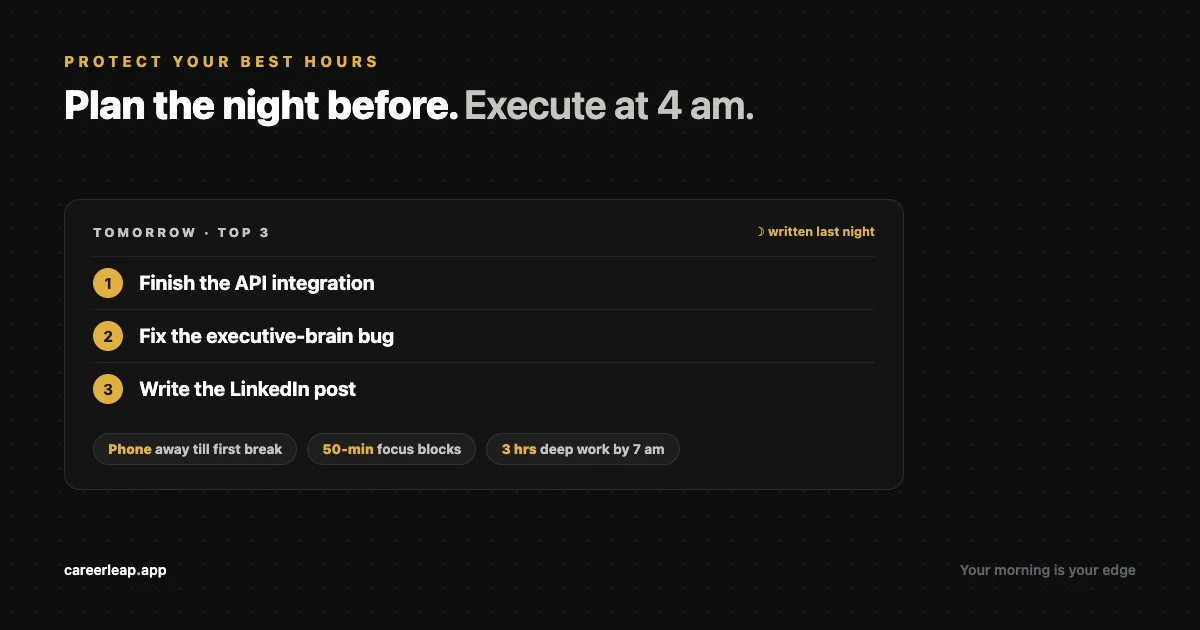
Before I close the laptop, I write down two things: what I accomplished today (a two-minute reflection) and my top 2 to 3 priorities for tomorrow. That's it. No elaborate system. Just enough to wake up knowing exactly what to work on first.
This matters more than it sounds. When you wake up without a plan, the first 20 minutes of your morning go to deciding what to do. That's 20 minutes of your sharpest mental energy spent on logistics instead of work.
When the plan is already made, you just execute.
Step 3: Start small and build gradually
Most people design their morning routine like a wish list. Meditation, exercise, journaling, reading, planning, cold shower, healthy breakfast. All before 8am.
That's not a routine. That's a second job.
Start with 2 to 3 activities. For each one, ask yourself: if I did this every morning, would it make everything else in my day easier? If the answer is yes, it belongs in your starter routine. If it's just something you think you should do, leave it for later.
For most developers, the three that pass that test are:
- Two glasses of water before anything else. Hydration affects focus and energy more than most people realize. It's the lowest-effort, highest-return habit you can build.
- A clear first task, already decided the night before. This eliminates the decision fatigue that eats your first 20 minutes and gets you into work immediately.
- A timer set before you open anything else. The timer creates a container for your focus. Without it, the first hour drifts.
That's a complete morning routine. It takes less than 5 minutes to set up and it works.
Once those three feel automatic, add one more thing. Then another. Build it slowly so it sticks.
Step 4: Protect the first hour
The morning routine lives or dies in the first hour.
This is when your brain is freshest, your willpower is highest, and the world hasn't started demanding things from you yet. Protect it.
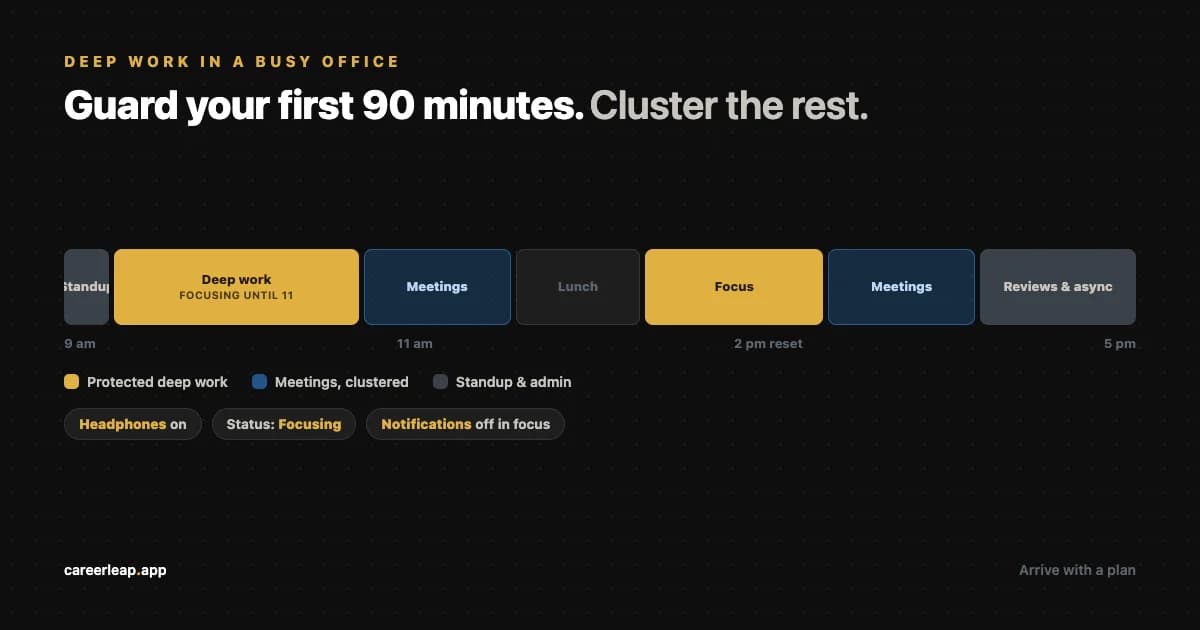
Phone away until the first break. Not on silent. Away. Notifications off. No email, no Slack, no social media. Your first hour is for the work you decided on last night, nothing else.
If you work from home, this is easier. If you work in an office, use the commute to review your top 3 and arrive with your intention already set. The first 10 minutes at your desk are for starting your first task, not catching up on what you missed overnight.
Step 5: Build consistency, not perfection
The goal is not a perfect routine. The goal is a consistent one.
You will miss days. You'll stay up late, sleep in, skip your walk, or start the morning on your phone. That's fine. The question is what you do next.
One missed day is nothing. Getting back on track the next day is everything.
Track your routine simply. A checkmark in a notebook for each day you followed it. No apps required. After a few weeks, the streak itself becomes motivation. You won't want to break it.
What a realistic morning routine looks like
Here's a simple version any developer can start tomorrow:
- Wake up (whatever time works for you, earlier is better but consistency beats timing)
- Two glasses of water
- Open your first priority task from last night's plan
- Set a 50-minute timer
- Work
That's it. No cold shower required.
After 50 minutes, make your coffee or tea. Check your messages. Take a short break. Then decide if you want to add a walk, some stretching, or a few minutes of reading before the workday officially starts.
That's the whole system. Everything else is just adding to it over time.
Takeaways
- A morning routine starts the night before, not when you wake up.
- Control your evening first. Sleep is the foundation everything else rests on.
- Plan tomorrow before you close the laptop today.
- Start with 2 to 3 activities. Add more only after those feel automatic.
- Protect the first hour. Phone away, notifications off, first task already decided.
- Consistency beats perfection. One missed day means nothing. Getting back on track means everything.
- You don't need to wake up at 4am. You need to wake up with a plan.
Every week I send one practical tip to help you grow faster as a developer. No fluff, just what works. Join the newsletter.