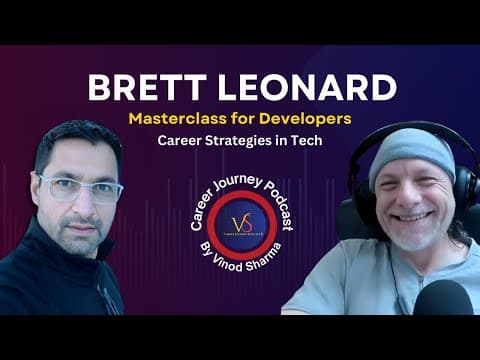
EP 44
1:08:56
Masterclass For Developers on Breaking Into Tech with Brett
This episode is a masterclass for developers who want to break into tech.
Bios B is a Technical Solutions Developer at Google who has been with the company for two years, living in Canada. He specializes in Google Cloud services, particularly Google Kubernetes Engine (GKE) and Anthos, helping customers build technical solutions and resolve cloud implementation issues. He also runs a YouTube channel with 18,500 subscribers where he teaches technology topics and career development, currently featuring a series on Azure DevOps.
Bai's approach to productivity centers on clear boundaries and old-school simplicity. He maintains strict separation between his work time at Google, family time, and content creation hours, ensuring he doesn't sacrifice any of these priorities. "I try not to sacrifice my family time I try not to do anything during my office time because that's where I'm earning my bread and butter," he explains. His system relies on physical whiteboards and notepads rather than digital tools, with separate daily and weekly to-do lists that he can see and check off throughout the day.
What sets Bai apart is his focus on consistency over perfection in goal setting. He advocates for process-oriented goals rather than outcome-oriented ones: "Sometimes you don't have to create goal for yourself sometimes you just have to pick a path do something and do it constantly." This philosophy has guided his YouTube journey, where his goal wasn't to get into Google but simply to share knowledge consistently with the community. He dedicates significant time to content creation - often 6-7 hours per day for 3-4 days to produce a single hour-long video - while maintaining his full-time role and community engagement through Discord calls and mentorship sessions.
Bai's core philosophy centers on the power of consistent action over ambitious goal-setting. "Sometimes you don't have to create goal for yourself," he emphasizes, "sometimes you just have to pick a path do something and do it constantly. Consistency is the key whatever you are doing if you are doing something consistently then you will definitely get the end results." He believes that focusing on the process rather than the outcome leads to unexpected opportunities - his own journey to Google being a prime example of this principle in action.
His advice to those starting their careers is refreshingly practical: instead of setting lofty goals like getting into a top company, focus on concrete skill-building activities. "If you want to get into a good company as a fresher your goal shouldn't be to get into company your goal should be I'm going to do DSA for next 3 months without any break or I'm going to learn a new technology." He reminds aspiring professionals that "where you start is not where you will end" and encourages them to remain open to opportunities while working consistently toward improvement. Most importantly, he learned from his failures - citing his 11 failed Amazon interviews over three years as crucial preparation for his eventual success at Google.
"I have never worked with a company where people are offering help without even asking so I am lucky to be part of one such team everyone is there to help you out whether you ask it or not"
— Technical Solutions Developer Describing the collaborative culture at Google and how colleagues proactively offer assistance.
"I felt the time that I spent in watching TV or watching Cricket or anything else I don't enjoy that time I am just killing my time doing those things because I have some time but when I do the video publishing video creation and whatnot"
— Technical Solutions Developer Explaining what motivates him to create YouTube content and how he replaced passive entertainment with purposeful content creation.
"when I started it I did not start it with any intention it was just to help the community it was just to see if it interests me or not and then I started enjoying it"
— Technical Solutions Developer Reflecting on how his YouTube channel began organically from a desire to help others rather than any business plan.
[0:00] hello welcome and Namaste today our
[0:03] guest is bios Bai bios B work in uh
[0:07] Google for last two years he lives in
[0:10] Canada he's working in Google as a
[0:13] technical solution developer and take
[0:16] care of
[0:17] cloud um and anything related to Cloud
[0:21] for their customer uh P by and I know
[0:24] for almost a year now through Twitter
[0:28] and on the side P has a YouTube channel
[0:33] where he teach about anything in
[0:37] technology how you can build your career
[0:41] he talk about General topic as well as
[0:44] go deep dive into cloud and currently
[0:48] he's doing a series on azer so you have
[0:51] if you have not checked his YouTube
[0:53] channel it's a must he has about
[0:56] 18,500 subscriber as of today
[1:00] and everything that he shares is all
[1:02] free for you to consume so with that
[1:06] first thank you so much for to come on
[1:09] my podcast and also to do everything
[1:13] that you're doing for the community and
[1:16] helping uh all the developers build
[1:19] their career with that I wanted to hand
[1:22] over M to you to ask you what is your
[1:26] role at Google and how is your typical
[1:29] day and week look like first of all
[1:32] thank you so much vinod G for inviting
[1:34] me to this podcast and giving me this
[1:36] wonderful opportunity to share My Views
[1:39] with the audience and I'm really over of
[1:42] like a person like you inviting me and
[1:44] giving me this opportunity so thank you
[1:47] thank you so much to start with my
[1:49] current role at Google so I am working
[1:52] as a Technical Solutions developer at
[1:54] Google where I help Google Cloud
[1:56] customer in building their Technical
[1:58] Solutions helping any issues they have
[2:01] related to their Cloud implementation
[2:03] you know if we talk about specific
[2:05] services that I work on or that I have
[2:07] expertise with it would be Google
[2:10] kubernetes engine gke and anthos and
[2:14] that's my primary specialization and my
[2:15] secondary specialization is devops tools
[2:18] Cloud build Cloud deploy anything
[2:20] related to Cloud plus observability like
[2:23] Cloud logging Cloud monitoring alerting
[2:25] and so on so these are the services that
[2:28] I mostly work with and I help as I said
[2:31] I help Google Cloud customers in in
[2:34] solving their issues in helping them out
[2:36] if they are stuck somewhere and then
[2:38] basically showing them a path how they
[2:41] can make better utilization of cloud so
[2:45] that's what I do thank you and how is
[2:48] the typical day or a week look like yeah
[2:52] so they starts with like anyone else
[2:56] does in their role like first they go
[2:58] log in and they check their emails and
[3:00] reply the previous emails and so on then
[3:02] my day starts with I'm in a queue where
[3:06] wherever there is a new incident raised
[3:08] I am one of those person who get that
[3:11] incident assigned to irrespective of the
[3:13] customer irrespective of the customer
[3:15] reputation or how big the customer is it
[3:18] could be a P1 P2 P3 P4 so I get assigned
[3:21] to that incident and I'll start working
[3:23] on it so if required if that is a P1 or
[3:27] if it is a high priority issue I offer
[3:28] them a call I go on the issue with them
[3:31] like what exactly is it that you are
[3:33] facing I capture all the details like
[3:35] all the required logs their project
[3:37] details their cluster details and
[3:39] whatever it is there for me to ask so I
[3:42] get all the questions answered and then
[3:44] I start working on it because I would
[3:46] have some level of access in customers
[3:48] environment the readon access so I would
[3:51] have all the access to troubleshoot the
[3:53] issue so I take some time and I start
[3:56] working on it and then I communicate
[3:58] back to the customer if I have more
[3:59] questions or if I have a solution a work
[4:02] around on mitigation steps and so on so
[4:05] that's what I do on uh daily basis but
[4:08] in Google we have a concept of you know
[4:11] 20% role so when you work on a project
[4:15] so that is your 80% and optionally you
[4:18] can dedicate 20% of your time to
[4:20] something that you love something that
[4:22] you want to participate in something
[4:24] that you volunteer for it so those 20%
[4:27] project are mostly short-term projects
[4:29] and we can keep switching from one
[4:31] project to another and so I have done a
[4:34] lot of 20% projects such as I created a
[4:36] YouTube video for Google Cloud official
[4:38] Channel it was on anthos GKN and anthos
[4:42] it was a short video like five six
[4:46] minute video but because it is very
[4:49] structured you interact with Google
[4:51] cloud and YouTube's official team so it
[4:54] has a very rigorous process of review
[4:57] like it has technical review editorial
[4:59] review and lots of other reviews so it
[5:01] took me months to publish that 5 minute
[5:03] video Even though I had the background
[5:06] of recording and Publishing everything
[5:08] on my YouTube channel and usually it
[5:11] takes me three to four days to publish a
[5:13] 1 hour video like start from research
[5:16] recording editing everything if I do
[5:17] everything on my own but that five
[5:20] minute video took me months because of
[5:22] the process that they have implemented
[5:24] and I I learned a lot of things in that
[5:27] Journey how a professional video should
[5:29] look look like that was really a
[5:31] learning for me the other there are some
[5:33] other projects that I'm working on and I
[5:36] am part of also a deil project where I
[5:39] help Google Cloud customers that are
[5:41] startups or that are planning to move
[5:43] into Google Cloud so it's mostly related
[5:46] to organizing events with them giving
[5:48] them Hands-On workshop and a few other
[5:50] things so these are a few other
[5:53] responsibilities apart from that I do
[5:56] participate time to time in updating
[5:58] documentation on official Google website
[6:02] or Internal
[6:04] Documentation and anything that could
[6:06] add some value to the internal team as
[6:09] well as the outside Community whoever is
[6:12] accessing Google cloud or Google in
[6:14] general those are the few main things
[6:16] and we usually focus on these things as
[6:19] part of our day-to-day life but we do
[6:21] have different opportunities to
[6:23] participate in some let's say let's say
[6:26] I have a phone Google pixel 7 Pro it I I
[6:29] got it when it was not even released
[6:31] because I was part of one of the beta
[6:33] testing team I I was using it a year ago
[6:37] before it was launched and then
[6:38] reporting all the bugs all the feature
[6:40] request that it should have back to the
[6:43] developer teams and providing them logs
[6:45] and details that they want all in all it
[6:48] is a a power pack day that we have and
[6:52] even though if mostly what happens is
[6:55] when you work on something usually you
[6:57] don't like it but then with Google it's
[7:00] not the case because you will have so
[7:01] many opportunities to participate in
[7:04] another or participate in other ongoing
[7:07] initiatives and you could give your best
[7:10] in that without worrying about that you
[7:14] don't like it or if you don't want to do
[7:17] it for the future so yeah that's mainly
[7:20] what I do that's amazing there are so
[7:24] many things that people were desperate
[7:27] to get into that kind of situation
[7:30] especially access to different people at
[7:33] Google whether it is YouTube or cloud or
[7:36] devop how does it feel like I'm I'm sure
[7:40] you feel so empowered that you can just
[7:42] reach out to different people there and
[7:45] ask any question correct people are so
[7:49] helpful like I'm not bragging something
[7:52] but it is something that I have felt in
[7:54] my entire career of 12 plus years I have
[7:56] never worked with a company where people
[7:58] are offering help without even asking so
[8:01] I am lucky to be part of one such team
[8:04] everyone is there to help you out
[8:06] whether you ask it or not if someone
[8:08] feels like you need help or you might
[8:10] need help in the future they will reach
[8:11] out to you and they will just say hey
[8:13] let me know if you need any help or we
[8:15] can get into the call and we can try to
[8:17] sort this out together so it it feels uh
[8:21] really great it's an amazing experience
[8:23] and not just within my team if I reach
[8:25] out to any other team let's say I have
[8:27] some doubt to any of the AI tools that
[8:30] are there we have gini which was a
[8:33] rebranded version of b or any other team
[8:35] if I have some specific question they
[8:37] would definitely help me out if that is
[8:39] not something confidential or something
[8:41] that they shouldn't share they will
[8:42] definitely help me out with that it's
[8:45] really a great experience yeah and you
[8:48] had your YouTube channel prior to
[8:50] joining Google right correct as now in
[8:54] Google and you have access to all
[8:55] different people I'm assuming YouTube
[8:58] people as well so
[9:00] did you was that or how do I ask
[9:05] this having access to them did that help
[9:09] in your YouTube no because Google has a
[9:12] strict policy of what information we can
[9:15] share on word information is accessible
[9:17] even to Google employees M so if I were
[9:20] part of YouTube like the YouTube product
[9:23] team in any way possible then I wouldn't
[9:26] be even having my YouTube channel so
[9:28] there is a strict policy for that and I
[9:30] cannot access any resource that could
[9:33] help me grow my Channel or that could
[9:35] help me unethically so those are
[9:39] information is restricted to YouTube
[9:41] Team itself and as I said I wouldn't be
[9:44] even running my YouTube channel if I
[9:46] were part of YouTube product team or any
[9:48] other team associated with YouTube so
[9:51] you spend a lot of time in creating
[9:52] those videos you said three to four days
[9:55] just to make one hour video even though
[9:58] you have a video video editor right I I
[10:00] know you have a video editor so that
[10:03] three to four days is not including the
[10:06] time it takes to edit the video so I
[10:08] recently hir the video editor I was
[10:11] doing it by myself till now okay and
[10:15] sometimes if I'm recording something and
[10:17] I'm publishing two three videos per week
[10:20] like last week I published two videos
[10:22] and my video editor was on leave at that
[10:24] time so I edited both the videos myself
[10:28] because I don't want to delay the
[10:29] publishing process people are expecting
[10:31] me to publish the video so you know I
[10:34] cannot keep them waiting so that's why I
[10:37] do it myself Whenever there is a need or
[10:39] whenever my video editor is overwhelmed
[10:42] with a lot of other pending backlog
[10:44] videos so yeah that's what I mean and
[10:46] three to four days I was not saying like
[10:48] 3 to four days of 1 hour or two hour per
[10:51] days I'm saying like 6 seven hours per
[10:54] day and doing that for 3 to 4 days wow
[10:59] in a 1 hour video first I do a research
[11:02] rigorous research on that I do the
[11:04] Hands-On by myself and it takes me
[11:07] around 6 to 7 hours or even more than
[11:09] that sometimes and then I record it and
[11:14] while recording it I face some issues
[11:15] that I did not face earlier so I had to
[11:18] fix those issues while I'm recording and
[11:21] then I give it back to my editor or if I
[11:24] do myself if I'm publishing a video of 1
[11:26] hour and it would be like more than 1.5
[11:29] or something then he has to make all the
[11:32] cuts he has to make all the corrections
[11:34] in that and then we are ready to publish
[11:37] it but for publishing sometimes there is
[11:39] a GitHub repository associated with that
[11:41] so I have to maintain that as well
[11:44] sometimes we create blogs out of it so
[11:48] there are lot of other things as well
[11:49] that goes post publishing as well so
[11:52] yeah it is a lot of effort and you might
[11:54] know it you've been doing it for a long
[11:56] time so yes it is definitely something
[12:00] yes I know and then initially I spend
[12:03] more time like up to a week just editing
[12:08] my podcast video and initially I did not
[12:11] even like my voice so it was crazy so my
[12:15] question to you where does that energy
[12:17] come from what drives you to do all
[12:20] these YouTube
[12:22] videos so what drives me is first of all
[12:25] I like doing what I'm doing I really
[12:27] passionate about because after a long
[12:29] time when I started the YouTube channel
[12:32] after a really long time I found
[12:34] something that I love doing and when I
[12:38] started doing it and I was constantly
[12:40] doing it I was getting these amazing
[12:42] messages from the community like you
[12:45] videos are so helpful thank you for
[12:46] doing this and I have got a job by
[12:49] following this video or it helped me get
[12:51] the role transition it helped me get the
[12:54] promotion so these I saw one comment
[12:57] today when I was researching yesterday
[12:59] or today that somebody said oh finally
[13:02] the aers series for video number 13 is
[13:05] here and he was so excited that now he
[13:08] can watch it and it's a 16 video series
[13:11] right and he was I guess 14 14 has been
[13:14] published to to our yeah so he was he
[13:17] made a comment that oh thank God the
[13:19] series is there 14th video is here and
[13:22] then he was all excited to go ahead and
[13:24] try because when I started this series
[13:26] there were not a lot of content around
[13:29] Azure devops Azure devops it is a fairly
[13:32] new tool when we compare it with other
[13:34] cicd tools like Jenkins or anything else
[13:37] so Azure devops came into existence in
[13:39] around 2019 somewhere so there is not a
[13:43] lot of material and the labs on Azure
[13:46] website it's outdated so people finding
[13:49] a lot of difficulty in learning Azure
[13:51] devops I heard that they're CH Microsoft
[13:53] is planning to decommission that and use
[13:56] GitHub more I don't know if that's true
[13:58] or not hasn't happened till now so a lot
[14:01] of people are still using it and still
[14:03] migrating to Azure devops so we don't
[14:05] know what's their plan until it actually
[14:08] happens they could either merge both of
[14:10] these tools together but it's one and
[14:12] the same thing because GitHub action
[14:14] also is a yaml based tool Azure devops
[14:16] is a yaml based tool so it's one and the
[14:18] same thing moreover but so that's when I
[14:22] started it because people were finding a
[14:24] lot of difficulty in learning and
[14:26] understanding this particular tool so I
[14:28] thought maybe I I should put something
[14:30] out that is available free of cost and
[14:32] that could help a lot of people so that
[14:35] was the intention behind this mind and
[14:37] I'm so happy that I'm so glad that
[14:39] people are waiting for each and every
[14:41] video if I don't publish a video a week
[14:43] let's say I I was traveling from India
[14:45] to Canada right during that couple of
[14:47] weeks I did not publish anything because
[14:49] there were too many things to take care
[14:51] of while traveling and people were
[14:54] messaging me over LinkedIn over Discord
[14:57] Twitter everywhere that they could could
[14:59] possible even on YouTube comments that
[15:00] when is the next video coming and that's
[15:03] when I realized yes I made a commitment
[15:06] to everyone and people are expecting me
[15:09] to publish the video on a regular basis
[15:11] so whatever happens even if my video
[15:13] editor is on leave even if there is some
[15:15] other issue I should not stop doing it
[15:17] so that's why I have resumed it I have
[15:20] resumed it with full passion with full
[15:22] energy and even though I was publishing
[15:25] one video every week I'm now publishing
[15:27] two videos per week
[15:29] so I'll be completing this series next
[15:31] week like the coming week and I'll start
[15:35] with a new one after that okay yes so
[15:37] your question actually we diverted from
[15:39] the topic your question what motivated
[15:40] me so these messages these things like
[15:43] people waiting for me to publish the
[15:46] video this motivates me plus as I said
[15:51] this is something that I enjoy doing MH
[15:54] facing the camera I was really what do I
[15:56] say I I was really not ready to face the
[15:59] camera when I started my YouTube channel
[16:01] I started it with just the screen
[16:05] recording it was a faceless Channel that
[16:07] I rent for entire one year and after one
[16:11] year that's when I I faced my fear I
[16:14] came in front of camera and now I do
[16:17] every video in front of the camera even
[16:18] if it is a Hands-On lab of 1 hour I
[16:21] still keep my camera on all the time so
[16:24] it helped me as well it helps other who
[16:26] are following the videos and it was a
[16:29] win situation for me so I thought why
[16:31] don't I keep it
[16:33] going plus there is one more thing when
[16:35] I started it I did not start it with any
[16:38] intention it was just to help the
[16:40] community it was just to see if it
[16:42] interests me or
[16:44] not and then I started enjoying it and I
[16:49] felt the time that I spent in watching
[16:51] TV or watching Cricket or anything else
[16:53] I don't enjoy that time I am just
[16:55] killing my time doing those things
[16:57] because I have some time but when I do
[17:02] the video publishing video creation and
[17:04] whatnot so I feel like I have achieved
[17:06] something I felt like my day is
[17:09] productive now I can have a good night
[17:11] sleep because I did something that was
[17:14] not like watching a TV or I did not kill
[17:17] my time on that so that's the whole idea
[17:20] that's the whole intention behind this
[17:22] YouTube
[17:24] Journey wow I'm just getting excited
[17:28] instead of all the question that I'm
[17:30] asking and then the amazing answers that
[17:33] um you're giving I know you for a year
[17:35] but I did not know the depth um of um
[17:38] the reasoning and drive behind
[17:40] everything that you're doing so um I'm
[17:44] going to ask another question on this
[17:46] YouTube there is enough for you to do
[17:51] these and ongoing for many years to come
[17:54] but do you have a some kind of goal
[17:57] Target in your mind that where you want
[17:59] to take it in a year 3 years and five
[18:01] years from now I just want to grow my
[18:05] channel obviously numbers don't matter
[18:08] but numbers do matter when you're trying
[18:09] to reach to a maximum people right if I
[18:12] publish a video and no one watches it
[18:15] that my all efforts will go in vain
[18:17] because it's not reaching to the people
[18:20] that it's supposed to reach so I
[18:21] definitely want to grow and I need my
[18:24] goal is to provide videos or the content
[18:27] that is not available able easily that
[18:30] is something that is uh lot of people
[18:33] are finding difficulty in getting that
[18:35] free of cost obviously yes there'll be
[18:37] UD courses there'll be other premium
[18:39] courses that they could have but not
[18:41] everyone can afford those courses if we
[18:44] talk about college students if we talk
[18:45] about the professional who are in their
[18:47] early stages of career they don't have a
[18:50] lot of money to spend on on taking these
[18:53] courses or getting them themselves
[18:56] educated so my goal is to work for them
[18:59] my goal is to provide those initial
[19:02] steps those initial videos and content
[19:05] that could help Elevate their career
[19:07] that could help them doing something
[19:10] that you know they they wanted to do but
[19:12] they don't have a proper guidance or
[19:14] they don't have the resources to do so
[19:16] that's my goal is nothing fancy I'm not
[19:19] planning to start my own course or no at
[19:22] Tech nothing like that it just I want to
[19:25] keep doing what I'm doing I want to keep
[19:28] delivering the best and best videos out
[19:31] there and I I mostly Focus also what I
[19:34] do when I start a new series I I ask my
[19:36] subscriber or out there on LinkedIn
[19:38] YouTube Discord everywhere that these
[19:41] are the four topics that I'm planning uh
[19:44] to work on after this ongoing series
[19:46] what do you want me to do next and based
[19:49] on the votes that I get from the
[19:51] subscriber I start working on those the
[19:53] same happened with the Azure devops
[19:55] because I knew that azure devops has
[19:59] really a scarcity of resources when it
[20:01] comes to learning and everything not
[20:03] Everyone likes to read the documentation
[20:05] and Implement those steps people like to
[20:09] watch visuals and it it takes a
[20:12] longlasting impact on The Learning
[20:15] Journey and everything and also as I
[20:17] mentioned like most of the documents are
[20:19] outdated for Azure devops so that's so
[20:22] that's why and when I did the poll on
[20:24] LinkedIn and you would be amazed to see
[20:27] the results so around 55 to 60% votes
[20:30] were in favor of azure devops that's
[20:32] when I know yes this is something that I
[20:34] should definitely want to uh create a
[20:38] entire series on and this series many of
[20:40] those videos are over an hour long so it
[20:43] would be around 10 hours in total if we
[20:46] calculate all 16
[20:48] videos but I had a lot of amazing
[20:51] learning experience myself because I
[20:53] worked on this particular tool around
[20:55] four years back and then I never had a
[20:58] chance to to work on it but then now
[21:00] because I'm publishing the series I had
[21:02] to revise all the concepts I have to do
[21:05] the hands on everything and I have to
[21:08] research on everything because a lot has
[21:10] changed in past four years so yes it was
[21:14] an amazing learning experience for me as
[21:16] well now I I will add something here
[21:19] that I learned from dicki bushan and
[21:21] Cole they on ship 30 for30 and
[21:24] everything in writing and I learned a
[21:27] lot from them one other the thing that
[21:29] they said that that apply in this case
[21:32] to you is you're giving away everything
[21:35] for free which is
[21:36] amazing now there will be people who
[21:39] would want more access to you more
[21:42] access to you as in um directly learning
[21:46] from you either um for example they've
[21:50] learned they watch all your YouTube
[21:52] videos on Eder for example and now they
[21:55] have questions that or a very specific
[21:59] situation that they want to discuss with
[22:00] you what they suggested that on those
[22:04] moment uh when you have many of those
[22:07] requests there are you could create a
[22:10] program where they can there's a group
[22:13] session they watching your videos doing
[22:16] the exercise and then have your access
[22:19] one hour a we or couple of hour a week
[22:22] as a group to ask you question so there
[22:24] will be an X number of cost for that and
[22:27] then beyond that if uh someone want even
[22:31] more then it could be a one-on-one type
[22:34] sessions or very small type sessions now
[22:38] what happens let's say a person is uh
[22:40] earning 50,000 I'm just picking a random
[22:43] number okay 50,000 and uh this person
[22:46] can go from 50 to 75 or 100 or whatever
[22:50] right in their journey and they could uh
[22:54] by spending X number of dollar to gain
[22:58] some access to you they could actually
[23:02] amplify their approach anyway I'm not
[23:04] saying you do that I'm just saying that
[23:07] there are people who would want more
[23:10] access to you in whatever way it is and
[23:14] for you to be able to give that access
[23:17] because you cannot do that in a scale
[23:19] for 100,000 people but you could do that
[23:22] for 50 people you may want to think
[23:24] about those people at some point so I I
[23:28] thought about it around an Year back so
[23:30] that's when we started our own community
[23:33] so we have a Discord Community with 2500
[23:35] Plus members and we have a weekly call
[23:38] every weekend just after this podcast
[23:41] that we are having right now we have a
[23:42] Discord Community call okay so this is
[23:45] what like the first point that you
[23:46] mentioned people would would want to
[23:48] have more access to you in a group call
[23:50] where they could ask question where they
[23:51] have implemented something so yes we do
[23:54] that every week and that is free of Cost
[23:56] Plus in our Discord server there are
[23:58] dedicated channel for each of the videos
[24:00] or each of the series that we have and
[24:03] people who are facing their issues so
[24:06] they provide all the details over there
[24:09] the their code snippet the issue that
[24:10] they are facing errors the steps they
[24:12] have implemented the documentation or
[24:14] video that they have followed and
[24:17] initially I was helping them out grow as
[24:20] a community I needed more help so I
[24:22] reached out to everyone and see if we
[24:24] come together as a community and help
[24:26] each other and the results were amazing
[24:30] everyone now I don't have to reply to
[24:32] each and every message everyone in the
[24:34] community are helping each other without
[24:36] expecting anything in return just with
[24:38] the mindset of we are here to share
[24:40] knowledge we are here to gain knowledge
[24:42] it's something for everyone so people
[24:43] are helping each other in the community
[24:46] with any issue that they are facing and
[24:48] it is dedicated to cloud and devops so
[24:50] any issue with any cloud provider or any
[24:53] cicd pipeline specific anything that is
[24:56] cloud and Devo specific people are
[24:58] posting their issues over there and
[25:00] others are helping them out I also try
[25:03] to help them out once in a while like I
[25:05] check those messages every day or if not
[25:08] every day every alternate day and I try
[25:09] to answer those whatever I know and yes
[25:13] so I'm already doing that plus I started
[25:16] doing one-on-one mentorship session on
[25:19] top mid but I thought it was taking a
[25:22] lot of time out of my what do we call it
[25:24] the daily routine because if I'm doing
[25:26] those sessions I'm not able to work on
[25:28] my videos or the content that I was
[25:30] planning to do so it was just slowing me
[25:32] down so that's why I've stopped it
[25:34] temporarily initially when I started I
[25:37] have a story to share I when I started
[25:39] this topmate one-on-one session I was
[25:41] doing it for free even though I had
[25:43] limited Channel limited sessions per
[25:45] week but I was doing it for free but
[25:47] then people were taking advantage of it
[25:49] there was a day when I had three
[25:50] backtack sessions and no one showed up
[25:53] no one even cancelled it and no one
[25:55] showed up no one even messaged me that
[25:57] I'm going to be late or I'm not be able
[25:59] to make it so I feel really disheartened
[26:02] I put a comment on Twitter and like a
[26:06] tweet on Twitter and ask everyone's
[26:08] suggestion like how should we handle it
[26:10] I still want to help the community but I
[26:12] don't want to be in the situation again
[26:14] where I'm waiting for one and a half
[26:16] hour and no one showed up it's just
[26:18] wastage of my time and the whole
[26:20] intention behind helping the community
[26:22] it's not working with this approach so
[26:25] many of my friends even NES G suggested
[26:27] me
[26:28] even if you should be having some paid
[26:31] session because people if they don't
[26:34] respect your money if they don't respect
[26:36] your time they would definitely respect
[26:38] the money that they spend so that's when
[26:41] I started charging a nominal fee of $10
[26:44] from students $20 from working
[26:46] professional but again I did not felt it
[26:50] right to on because many of the sessions
[26:52] that I was doing those peoples are
[26:54] mostly they are struggling in their life
[26:56] they are not been able to make a living
[26:59] out of what they are doing so it was not
[27:03] felt right to me to charge money from
[27:05] them so that's when I decided okay I'm
[27:07] still going to charge the money but then
[27:09] I'll donate every money every single
[27:11] penny that I have earned from the top
[27:13] mate to an NGO so there is an NGO it's a
[27:18] India based NGO it's called pam.org
[27:21] and so whatever I earned from topmate I
[27:24] have donated each and everything to that
[27:27] NGO they are working to they are working
[27:29] to provide free education to
[27:31] underprivileged children in India so
[27:33] that's what they do and I really like
[27:35] the CA and I have donated everything to
[27:37] that till now and whatever session I'll
[27:39] be doing in the future I'll still be
[27:40] donating it to them plus because I work
[27:43] for Google whatever donation I make and
[27:46] if that NGO is associated with Google so
[27:48] they will double the donation payment
[27:50] wow so whatever donation I made Google
[27:54] contributed the same amount from their
[27:56] side so I thought yes that money
[27:59] couldn't be put to a better use than
[28:01] this that's what I did and that's what I
[28:03] continue for that cause I will book a
[28:06] session with
[28:07] you so I I answered both of your uh
[28:11] suggestions so group one-onone session
[28:13] still doing it and one-on-one session on
[28:15] top mate and this is what I meant by
[28:19] that so whoever is
[28:22] listening see how much is offering
[28:25] utilize that watch their video join the
[28:29] community ask question and I tell this
[28:33] to everyone the biggest help that you
[28:35] could do to the community is by asking
[28:38] the right question because you ask one
[28:40] question push will answer many other
[28:43] people will answer and it will help many
[28:45] people asking just asking the question
[28:48] and asking the right question is the
[28:51] very first and impactful contribution
[28:54] that you can make in a community all
[28:56] right awesome aome this is so much
[29:00] information here so much information
[29:02] here for um me to grasp and whoever will
[29:06] be watching um we got to see what you do
[29:10] at Google what drives you create these
[29:14] amazing videos and then on top of that
[29:17] everything that you're doing for the
[29:18] community and how people can utilize it
[29:21] right and then let's go slightly
[29:26] backward how did you get into Google I
[29:29] know you have created a video
[29:31] specifically for this so you already
[29:34] have a video but I do want to ask you if
[29:37] you can summarize your approach number
[29:39] one how did you come up with this idea
[29:42] that I want to join Google and then how
[29:45] did you prepare for it sure so first of
[29:49] all I never came with an idea to join
[29:51] the Google I never had the courage or
[29:54] the guts to even apply for Google it
[29:57] happens because it was meant to be but I
[30:00] started my channel and then I was
[30:02] publishing my videos I was learning a
[30:03] lot of new tools and Technologies while
[30:06] I'm publishing the videos and I was
[30:08] learning new clouds I was doing Hands-On
[30:11] I was doing certifications and
[30:13] Publishing technical blogs as well of
[30:16] whatever I was learning so that made me
[30:19] visible in over LinkedIn for a good
[30:22] reason not because I was posting
[30:25] something like follow me for this follow
[30:27] me for that but because I was publishing
[30:29] something that could help someone so it
[30:32] made my presence visible and it made it
[30:36] it put me in front of the hiring
[30:38] managers and the recruiters and
[30:41] everyone so that's when out of the blue
[30:44] one day Google recruiter reached out to
[30:46] me I did not apply as I said I never had
[30:49] the Dare or courage to apply for Google
[30:52] because when we talk about Google we
[30:54] talk about DSA coding and a lot of other
[30:57] things that not really good
[30:59] at I I don't enjoy those things and I
[31:02] know the basic coding I know the basic
[31:05] of how to write the code how to
[31:06] troubleshoot the code but that's about
[31:08] it I'm I'm not a hardcore developer and
[31:11] I never enjoyed it so that's the line
[31:14] that I never chose so that's and that is
[31:17] the reason why I never applied for
[31:19] Google but then he reached out to me and
[31:22] told me like these are the roles that
[31:24] are there and if you would be interested
[31:25] in going further with the process the
[31:28] first question that I asked him would
[31:29] there be any DSA round would there be
[31:31] any coding round he explained me the
[31:33] process he said there won't be any DSA
[31:35] round because it is a cloud specific
[31:36] role it is not a hardcore development
[31:39] role so you would not be building
[31:40] applications but you will be working on
[31:43] troubleshooting uh Services you'll be
[31:45] working on helping customers customer
[31:46] facing role and there would be a coding
[31:49] round but it would be mostly around
[31:51] troubleshooting the code where you would
[31:53] be given a snippet of the code and you
[31:56] have to walk us through the code would
[31:58] line by line dry run it and find any
[32:00] problems in that that was about it and
[32:03] that would be in your preferred language
[32:05] of
[32:06] choice so I thought okay I cannot say no
[32:09] to opportunity that comes by itself so I
[32:12] said yes okay let's go with it and we'll
[32:15] see what happens so I just went ahead
[32:17] with it without expecting too much or
[32:21] without thinking too much about what
[32:22] would be the outcome so I just went
[32:24] ahead with it and then one thing
[32:28] led to another and I had few interview
[32:31] rounds so there was one round with the
[32:33] recruiter itself over the phone then
[32:34] there was a technical round over the
[32:36] phone and there were four rounds back to
[32:39] back in a day so it was like 50 minutes
[32:41] round each 10 minutes a break in between
[32:44] and then there was next round so it was
[32:45] like four rounds back to back wow and
[32:48] then after because it was a holiday
[32:50] season Christmas New Year at that time
[32:52] it there was a delay in the hiring
[32:55] process for around a couple of months
[32:57] after a couple couple of months I had
[32:59] one more round it was with the hiring
[33:01] manager it was informal discussion and
[33:04] he was telling me about the role the
[33:07] team and if I would be comfortable in
[33:09] joining that so they were they were
[33:11] giving me all the flexibility to ask the
[33:13] question and any doubts that I could
[33:16] have so it was more of a interview from
[33:18] my side where I was given opportunity to
[33:20] ask the question and that was about it
[33:23] and then recruiter reached out to me so
[33:24] this is what we can offer you and we had
[33:27] a lot of
[33:28] negotiation back and forth but at the
[33:30] end they released the offer and that's
[33:32] how I got into wow so the first thing to
[33:36] point out you did not apply you was not
[33:40] even thinking about it but you was
[33:41] creating some buzz in social media so
[33:43] let's get deeper into that what kind of
[33:46] buz and how long it was and what are the
[33:48] specific thing that you were doing at
[33:50] that point yeah so at that time if I
[33:52] remember correctly like I said I did
[33:54] Azure devop series because there was not
[33:56] a lot of content around it so at that
[33:58] time gitlab cicd was the one thing so I
[34:02] was working on a client it was a
[34:04] freelancing project that I got and in
[34:07] that they had this specific requirement
[34:09] to use gitlab to automate their entire
[34:11] cicd pipeline including the
[34:13] infrastructure provisioning so I thought
[34:16] it's a good opportunity for me to learn
[34:17] so I learned everything I implemented
[34:20] that over there for like in a period of
[34:23] 3 to 5 months and because I thought I
[34:27] just learned it I don't want to waste
[34:29] the knowledge and I don't want to just
[34:32] keep the knowledge to myself I thought
[34:34] of sharing it with everyone so that's
[34:36] why I created an entire video on gitlab
[34:39] it was 1 hour plus video 1 hour 17
[34:41] minute something and I included each and
[34:44] everything with the help of an entire
[34:46] project like everything like how to use
[34:49] variables parameters how to use Secrets
[34:53] everything that you should have in the
[34:55] git lab and not just that I've included
[34:58] animations to explain the concept in a
[35:00] more graphical way and a lot of other
[35:02] things when in the interview they asked
[35:05] me something that you have done that you
[35:09] are proud of I told them this why I did
[35:13] that and how it helped everyone and why
[35:17] I'm proud of it and they were uh they
[35:22] were really happy listening to it
[35:23] because Google is about open source
[35:27] contribution and when they hear these
[35:29] things that we do about the community to
[35:32] help the community and whether it's an
[35:35] open source contribution or leading
[35:37] developer groups or user groups or
[35:40] creating technical blogs videos
[35:42] something that could help the community
[35:44] in expanding their knowledge set so they
[35:46] really give importance to those
[35:48] things so that that was a plus point
[35:52] that went into my favor that helped me
[35:55] in presenting myself in a better way
[35:57] that I could have done without it and
[36:00] did recruiter say that what is specific
[36:03] content that he found no he did not
[36:06] mention anything like that okay but you
[36:08] had different post on LinkedIn you have
[36:10] videos and you have okay yes and blogs
[36:14] as well because I was writing blogs and
[36:17] the funny thing to know is I was not
[36:19] even working on gcp at that time I did
[36:21] not have any gcp experience I was
[36:23] working mostly on AWS and Azure and
[36:27] that's the only experience I had till
[36:28] then and I also told them that I never
[36:31] worked with Google cloud and he said you
[36:33] worked with AWS Ando that's more than
[36:36] enough because concept will always be
[36:38] the same it's just the cloud provider
[36:40] have different services and they'll be
[36:42] doing the same thing with the different
[36:45] services and sorry I I just want to add
[36:48] that when you did the site project for a
[36:51] client you was working full-time at
[36:54] another company I was working as a
[36:56] contractor I was working with the Bank
[36:59] of Montreal as a cloud engineer but it
[37:01] was a contract role I see so in Canada
[37:04] I'm not sure if the same in us but in
[37:06] Canada we have a permanent role and a
[37:08] contract role in contract role you get
[37:10] paid early and you have your own
[37:13] Corporation so I have my own Corporation
[37:17] and I can take additional projects on
[37:19] that Corporation right because I am
[37:21] working as a independent contractor I
[37:23] don't have any binding contract with the
[37:26] with a particular company so us if
[37:28] you're working full-time you can still
[37:30] take site project it's completely
[37:33] allowed as long as there is no conflict
[37:36] of interest and then second if you're
[37:38] not doing that during the office hour
[37:40] cor as long as you ethically ma managing
[37:43] it you can do that yeah I guess it's the
[37:46] same in Canada as well it just I was not
[37:48] even in the at the permanent role at
[37:50] that time I was doing Contracting for a
[37:52] client yeah the reason I wanted to
[37:55] specify that or add that in is that you
[37:59] there is no excuse to do the side work
[38:03] and then utilize that information to
[38:06] share with write a technical article of
[38:08] exactly how you have done XYZ and that
[38:12] just by doing that you got your
[38:14] visibility and then a recruiter reach
[38:16] out to you and then you were able to use
[38:19] that experience in your interview as
[38:21] well y it it's a great example as I've
[38:24] mentioned YouTube played and not just
[38:26] YouTube the blogs that I written and I
[38:28] was AWS I'm still am I'm AWS Community
[38:31] Builder so I published blogs on their
[38:33] website as well so all this community
[38:36] efforts that I was putting into whatever
[38:39] I could do from my side so that really
[38:41] helped me getting into Google or even at
[38:43] least getting my resume short listed
[38:47] where were you writing all these blogs I
[38:50] have I was writing on medium.com dev. so
[38:54] dev. where I write AWS specific blogs
[38:58] and medium and then I guess these two
[39:00] are the main side I was contributing a
[39:02] little to stack Overflow as well okay
[39:05] and yeah that's mostly about it and I
[39:07] was focusing mostly on YouTube videos
[39:10] okay medium has been my platform too
[39:12] I've been writing there for since
[39:14] 2019 I have more than 300 articles oh
[39:19] that's amazing and there was a point
[39:21] where I had
[39:22] 150,000 monthly views and that's when I
[39:26] I decided to join and call that I'm
[39:29] getting traction and to scale it to the
[39:32] next level I have to do something more
[39:35] and I'm blessed that I did that because
[39:39] they gave me a completely different
[39:41] perspective of where I can take it okay
[39:44] it has been a journey that's amazing
[39:47] that's amazing to know all right I want
[39:51] to ask one last question around your
[39:54] career Journey a very high level view of
[39:58] in last 12 years I'm sure the journey
[40:02] has taken many shape many
[40:04] turns and there are probably things that
[40:08] has guided your path and so if you have
[40:12] to reflect on it from a point where
[40:17] somebody who is starting their Journey
[40:19] MH and giving them an idea that how you
[40:23] started how you navigated through this
[40:27] path and 12 year later what's your
[40:30] biggest learning maybe one two or three
[40:33] four sure points on top of my head my
[40:37] biggest learning would be sometimes you
[40:39] don't have to create goal for
[40:42] yourself sometimes you just have to pick
[40:44] a path do something and do it constantly
[40:48] consistency is the key whatever you are
[40:50] doing it if you are doing something
[40:52] consistently then you will definitely
[40:54] get the end results because let's say my
[40:57] goal would have been if my goal would
[40:59] have been getting into Google or getting
[41:01] into any big Brands MH then maybe I
[41:04] wouldn't have achieved it but my goal
[41:06] was not that my goal was to share the
[41:10] Knowledge and Skills with the
[41:12] community and do it over a period of
[41:15] time do it consistently so that was my
[41:18] goal but it was not even a goal it was
[41:21] doing something that I was L doing but I
[41:23] was doing it for a long time I'm still
[41:25] doing it and it help me get into Google
[41:28] so goal is just an end result something
[41:32] that you would get when you do something
[41:34] for a period of time so that's what my
[41:37] suggestion is sometimes you don't have
[41:39] to create goal for yourself and
[41:41] sometimes you just have to let's say if
[41:43] you want to get into a good company you
[41:46] know as a fresher your goal shouldn't be
[41:49] to get into company your goal should be
[41:52] I'm going to do DSA for next 3 months
[41:54] without any break or I'm going to learn
[41:57] a new technology I'm going to learn a
[41:59] new programming language over a period
[42:01] of 6 months or one year and that could
[42:04] help me get into job right so that's
[42:07] what I would suggest do something that
[42:10] you can do over a period of time and I'm
[42:13] sure I have repeated this many times but
[42:15] this is what I meant by that and you
[42:18] will definitely get the end results
[42:20] Maybe not maybe not tomorrow maybe it
[42:22] will take some days some months but it
[42:25] will definitely happen and one other
[42:28] point is where you start is not where
[42:30] you will end you will encounter many
[42:32] opportunity as long as you're open for
[42:34] them and working hard toward them you
[42:38] will get somewhere it doesn't have to be
[42:41] where you
[42:42] started awesome this is super
[42:46] exciting I'm I'm just pumped with all
[42:48] the information that we have discussed
[42:50] in this episode I want to take it to
[42:55] toward the end and I think we have
[42:58] covered this but let's quickly talk
[43:01] about your time management and goal
[43:04] setting methods okay when it comes to
[43:07] time
[43:08] management I try not to sacrifice my
[43:12] family time I try not to do anything
[43:15] during my office time because that's
[43:18] where I'm earning my bread and butter so
[43:21] I wouldn't want to take advantage of it
[43:24] so I keep those time separate and after
[43:27] that that I work on creating the content
[43:30] or something that I was planning to do
[43:32] for a long time so I create a to-do list
[43:34] for myself the task that I want to
[43:36] achieve on a daily basis and the task
[43:39] that I would want to achieve on a weekly
[43:41] basis and I keep sticking to it
[43:44] sometimes I have to move the task in
[43:46] between like I have to carry forward it
[43:48] to the next week or it usually happens
[43:51] so that's what I do and I I do follow
[43:55] some creators that really help me with
[43:57] getting better at time management like
[43:59] Ali abdal is one of those and I highly
[44:02] recommend if anyone is struggling with
[44:04] time management or if they are not
[44:06] productive enough so they should
[44:07] definitely watch Ali abdal he has some
[44:10] amazing productivity tips time
[44:12] management and all those things it
[44:14] really helps me I've tried a lot of
[44:16] things I've tried keeping everything on
[44:18] notion on click up and everything but at
[44:20] the end what work with for me was old
[44:24] school notepad or just I'll show you
[44:26] over here here over here are my to-do
[44:28] list so one is weekly and one is daily
[44:31] so that's my to-do list those two white
[44:34] white Bo right yes this one and this one
[44:37] over here yes these two yeah I I will
[44:41] actually show my oops oh I should not
[44:44] have done this there in the corner yeah
[44:48] my whiteboard okay so so that's what
[44:51] worked for me at the end I tried a lot
[44:53] of thing I tried doing it over the phone
[44:55] applications Mac applications and
[44:57] everything but I guess it doesn't matter
[45:00] if you are using any technology or if
[45:02] you are doing it old school so whatever
[45:04] work best for you is the way to go I
[45:07] also have this I keep this small notpad
[45:10] with me all the time yeah so see if we
[45:13] doing the same
[45:16] thing yeah yeah this definitely work one
[45:19] of the other thing that has worked
[45:21] really well for me is the quarterly
[45:23] planning so I said big goals for the
[45:26] quarter
[45:27] and um three weeks ago I had a
[45:29] realization that only three week left so
[45:32] it completely changed how my relaxedness
[45:35] to uh slightly more aggressiveness but
[45:39] uh quarterly planning helped me so I set
[45:41] the goal that break it and then do some
[45:44] kind of weekly sessions with myself like
[45:47] you were saying right weekly goals and
[45:49] then daily goals so that has been
[45:51] working really well all right all right
[45:53] all right my last three questions
[45:57] let's start with this one is there any
[46:00] question that I have not asked you but
[46:02] you want to answer I guess we have
[46:05] covered everything it just I would say
[46:07] one thing like about the whole process
[46:10] of getting into Google so I would like
[46:11] to share one experience so when I was
[46:14] interviewing for Google so it's not
[46:17] really easy to get into Google if even
[46:19] if you get a call even if your resume
[46:21] get shortlisted even then it I I cannot
[46:24] say the actual number but there is a
[46:26] high chance that you would be rejected
[46:29] so what helped me along that Journey
[46:31] what helped me Asing the interview was
[46:33] my previous failures my previous
[46:35] rejections so I I created a whole video
[46:38] on that about my experience interviewing
[46:41] with Amazon Canada AWS yes so I failed a
[46:46] lot of time during those interviews so I
[46:48] gave around 11 interviews 11 different
[46:52] roles 11 interviews for different roles
[46:54] for a period of three to four years
[46:57] and sometimes I cleared all the rounds
[47:00] and I failed in the last round or
[47:01] sometimes I was not even able to clear
[47:04] the first telephonic interview round but
[47:07] every failure after every failure I
[47:09] created a list of all the questions that
[47:12] were asked and I did a self-realization
[47:15] what I know and what I need to work on
[47:18] so I actually worked on myself after
[47:21] every interview instead of feeling bad
[47:23] that I was getting rejected every time
[47:25] so I was not doing that I did not have
[47:27] time to regret but I could have done and
[47:30] what I did was to to realize my mistake
[47:33] and you know realize what could have I
[47:36] done better and I worked on that so that
[47:39] helped me because interview process for
[47:42] Amazon and Google is almost the same it
[47:44] is again like in Amazon as well there
[47:46] was an interview Loop or four five
[47:49] rounds in a day back the same that
[47:51] happened with Google so it was a
[47:53] rigorous process it was something that
[47:57] not everyone has faced and those
[48:00] rejections helped me uh create the
[48:03] better version of myself because I got
[48:07] the time to think about I got the time
[48:10] to work on my skills to work on myself
[48:12] and then finally I was able to crack the
[48:14] Google inter so yeah that's that's what
[48:17] I wanted to
[48:18] share that's so powerful advice people
[48:21] say that they're not getting job but
[48:24] just working after the interview is more
[48:27] crucial than working before the
[48:30] interview and and I have used the same
[48:33] tactics when I was giving interview is
[48:35] that every time I finish the interview
[48:37] the first thing I would do is to brain
[48:39] down everything that they have asked and
[48:41] then I will try to write everything that
[48:45] I have answered and then anything that I
[48:48] have missed and how can I improve the
[48:50] answer that I have given in these
[48:51] interviews and plus reading about the
[48:55] question that I had no idea about
[48:57] yeah correct yeah that's what I did and
[48:59] it really helped me and it's then when I
[49:02] realize I don't know a lot of things and
[49:05] I think I should be aware of these
[49:07] things these are some of the basics and
[49:09] and sometimes it happens when you are in
[49:10] front of interviewer and they ask you a
[49:12] simple plain question you just freeze at
[49:16] that moment even if you know the answer
[49:19] even if you have worked on it you
[49:21] sometimes don't have a lot of confidence
[49:23] answering those freely it's when your
[49:27] previous interview experience it when
[49:29] you practice it a lot that's what helps
[49:32] over there you know what worked for me
[49:34] and this was a common phenomena that
[49:37] after three to five interview my voice
[49:40] is Flowing corre FL but first three
[49:43] interview definitely just like what you
[49:46] saying that I know the answer but I
[49:47] cannot deliver it or I even if I'm
[49:49] trying to answer it I do not have the
[49:52] confidence in my voice yep that happened
[49:55] a lot of times
[49:58] okay just nothing it's just another
[49:59] interview so after you have passed that
[50:02] threshold of three to five interviews
[50:03] after that you started taking interview
[50:06] as a discussion rather than an interview
[50:08] yes it will become more of a discussion
[50:11] like what we are doing now right 100%
[50:14] yeah so that's what happens so is there
[50:17] any question for
[50:19] me I had a lot of question for you and
[50:22] we and thank you for giving out time a
[50:25] few a couple of months back when we
[50:26] discuss a lot of things the same thing
[50:28] about time management and everything so
[50:31] I believe everyone who is doing anything
[50:33] apart from their 9 to5 job is struggling
[50:35] with time management with productivity
[50:37] and lot and you really helped me with a
[50:40] lot of my questions out the main advice
[50:44] that you gave me was Outsource the thing
[50:46] that is eating up most of your time and
[50:48] it's not really helping you are not
[50:50] enjoying it all those things and so you
[50:53] already answered all those questions and
[50:55] thank you for doing that
[50:57] you're most welcome you're most welcome
[51:00] last question for today's session any
[51:04] advice to
[51:06] audience my audience is people who do
[51:09] not have their first job or who have the
[51:13] first job and in in um three to five
[51:16] year experience and trying to think what
[51:19] next for them so those are the two
[51:20] people that I cater
[51:22] for so I would say if you are something
[51:26] who don't have the first job beginner or
[51:28] the college graduates I would say if you
[51:32] have a lot of time like if you are still
[51:33] in college you have a lot of time so
[51:35] experiment out different things while
[51:37] you still have the time try to do your
[51:39] handson coding front end back end
[51:42] database security Cloud devops whatever
[51:45] you think is there in the market or
[51:47] whatever you think will sustain in the
[51:49] market for a long time and see what you
[51:51] enjoy the most so at the end of the day
[51:55] you will be able to deliver you 100% on
[51:57] something that you enjoy the most and
[52:00] not something that you are doing just to
[52:02] get a job so while you are still in the
[52:05] college do those experiments and play
[52:07] around and see what you enjoy the most
[52:09] and then give your 100% on that thing so
[52:13] that would take you a long way and the
[52:16] other advice for a 3 to five years of
[52:18] experience is try to utilize your time
[52:21] in the things that matters that helps
[52:22] you become productive or get something
[52:25] out of it people try to create a lot of
[52:27] fear that Deon is here software
[52:29] Engineers might lose their job so don't
[52:32] get tensed about it don't involve
[52:34] yourself in those conversations on just
[52:37] try to see even if creating an AI bot
[52:42] whatever it is you still have to write
[52:44] the code and the company that is
[52:47] promoting their first AI engineer they
[52:49] are still hiring software Engineers so
[52:51] this is just a marketing gimmick and
[52:54] this is not something thing to be afraid
[52:57] of it it's just an another Innovation
[53:00] it's just another disruptive innovation
[53:02] and we should not be afraid of we should
[53:04] take advantage of it how we can use it
[53:06] to make our life easier how we can use
[53:08] it to make ourself more productive than
[53:10] we were before try to focus on the
[53:13] things that matters to you and try to
[53:16] keep yourself away from these
[53:18] discussions these things that really
[53:21] does not help anyone that's the only
[53:24] advice that I would have and every new
[53:26] technology while it create disruption it
[53:28] also creates some new opportunity and if
[53:31] you are early in the wagon B then you
[53:34] can get those opportunity compared to
[53:37] somebody who's sitting on the sideline
[53:39] and
[53:40] worrying that's true and there was a
[53:44] recent comment on my YouTube channel I
[53:45] still have to answer that so it was like
[53:47] Devon is here would it take devops job
[53:50] so my answer to that would be if you are
[53:53] doing something that is repetitive that
[53:56] does not require a lot of logical
[53:58] thinking or that is solely depend on
[54:01] tool and technology and nothing that you
[54:03] are putting from your side then yes it
[54:05] might replace your job but if you are
[54:06] doing something and if you can move from
[54:10] let's say you are proficient in one
[54:12] technology so even if that technology
[54:14] get obsolete you still have the
[54:15] background of it you have know how it
[54:18] works end to end you can still move to
[54:20] another technology if that becomes right
[54:23] so that should not stop you from where
[54:25] you want to be but if you are doing
[54:27] something doing let's say all the
[54:29] repetive works we we have seen like the
[54:32] jobs that have be become obsolete let's
[54:34] say voice overs or transcribing jobs
[54:38] those things that AI can easily do so
[54:42] try to this is the high time that we
[54:45] think about upskilling ourself and
[54:47] prepare ourself for the future because
[54:49] if we are not upskilling ourselves
[54:51] someone somewhere is doing that and that
[54:54] that person could take your job and that
[54:58] person is something yes you should be
[55:00] worried about not from the AI or any
[55:03] other tool in the
[55:05] market
[55:07] awesome this was one of the best uh
[55:09] conversation that I had so thank you so
[55:11] much P for coming as a guest on this
[55:14] podcast thank thank you v g I really
[55:17] enjoyed each and every question and I
[55:19] wish we had more time but we tried to
[55:21] cover each and everything that we wanted
[55:23] to so thank you so much and I really
[55:25] appreciate it e
This episode is a masterclass for developers who want to break into tech.
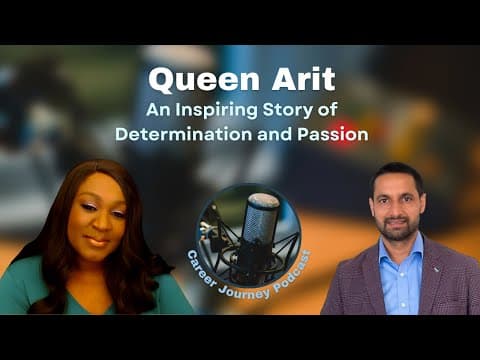
In this episode, discover the inspiring story of Queen Arit, who broke into tech at 38 through sheer determination and passion.
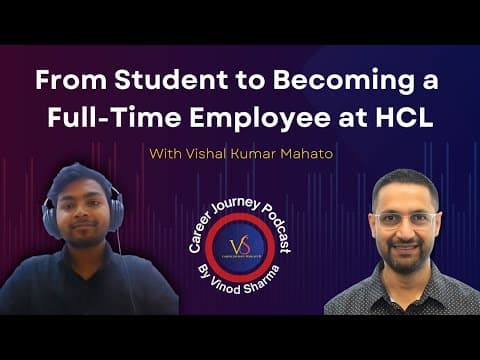
In this episode of the Career Journey Podcast, we dive deep into Vishal's transition from being a class 12th student to a full-time software engineer at HCL. Vishal shares his journey, the importance
Explore more career stories and insights from developers and founders.