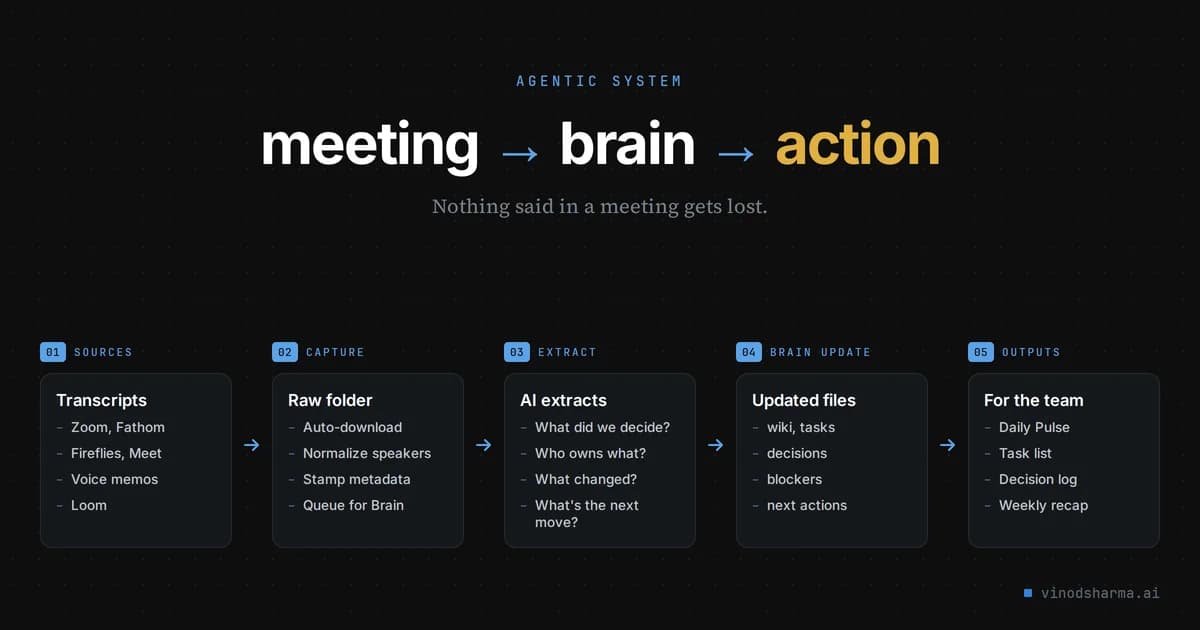
When the system is doing the capturing, it does not matter who attended the call. It does not matter who took notes. It does not matter who was distracted because their kid walked in. The transcript is the source. The agent is the reader. The brain is the destination. Nothing relies on a human remembering.
That changes the texture of how we work.
There is less "what did we say again?"
There is less "who was supposed to do that?"
There is less context stuck in one person's head.
There is more continuity. More accountability. More follow-through.
The business gets quieter. Not because we are talking less. Because the loose threads stop fraying.
Why this is the first automation I would build
If you are running an agency or a startup right now, you already have this situation.
The calls are happening. The decisions are being made. The tasks are being discussed. The knowledge is already there.
It is just trapped inside transcripts, recordings, chat threads, and the heads of the people who happened to be in the room.
You do not have a knowledge problem. You have a routing problem.
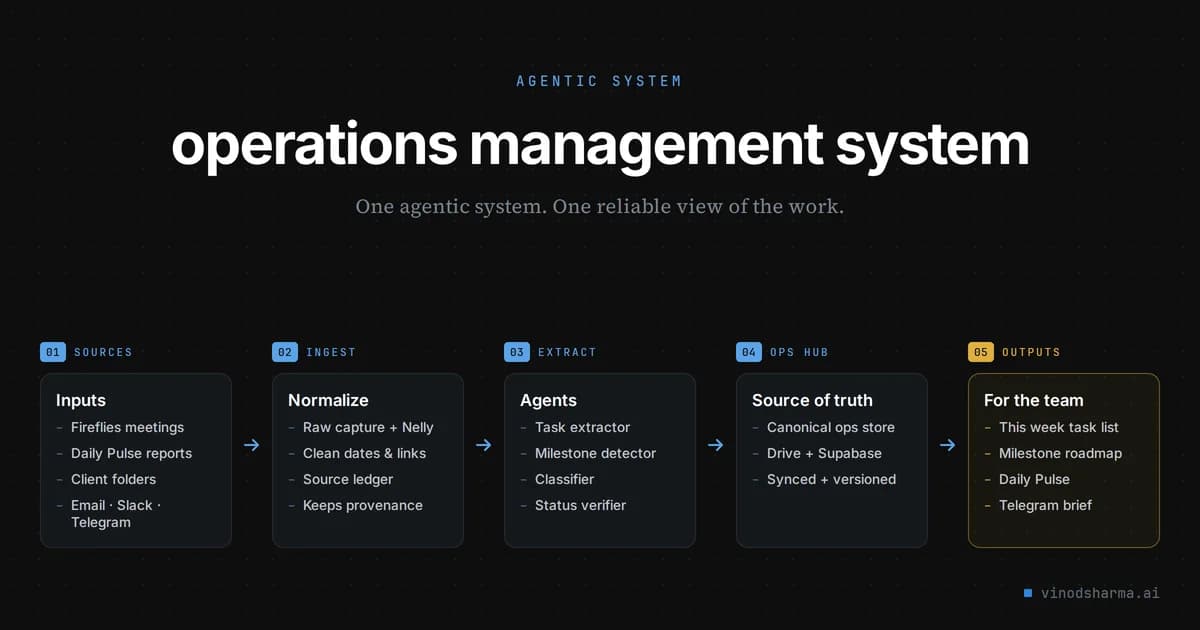
AI agents make it possible to take that information, structure it, and keep the systems updated without anyone touching it. It runs in the background. It does not ask for permission. It does not need a process change to adopt.
It just makes sure the important things you already discussed do not disappear after the call ends.
That alone earns its keep.
The part nobody tells you
You will not feel the impact in the first week.
You will set it up. It will start producing notes. You will read them once, nod, and forget the system exists.
The impact shows up around week three. The week you needed to remember something from a meeting four meetings ago and you actually could.
The week your co-founder asks "what's the status of X?" and instead of pulling up Slack and Fireflies and Drive, you open one file and read the answer in 20 seconds.
The week you realize you have not done a "let me catch you up on everything" meeting in a while. Because nobody needed to be caught up.
That is the moment the system pays you back.
What it actually replaces
It does not replace the meeting. The meeting still has to happen. People still have to talk through hard problems together.
It replaces the part after the meeting. The part where you used to depend on one person being organized enough to write the notes, send the email, update the project, follow up with the owners.
That part is now a system.
The meeting becomes the input. The brain becomes the output. The human work in between is gone.
If you are building any kind of business right now, that is the trade I would make first.
The calls are already happening.
The knowledge is already there.
The only question is whether it disappears when you hang up.
For me, the answer used to be yes. Now it is no.
That is the upgrade.