One post a week is enough to stay visible. Two or three and you start building real momentum.
3. Engage with the right people in the right way
Posting is only half of it.
The other half is showing up in other people's comments. Not with "great post!" but with something that actually adds to the conversation.
Find developers, engineering managers, and recruiters in your target niche. Follow them. Read what they post. When you have something real to say, say it.
A thoughtful comment on a hiring manager's post can do more for your job search than 50 cold applications.
Every comment you leave is a small introduction.
Consistent engagement means aiming for 5 meaningful comments per day. Not "great post!" but a real observation, a follow-up question, or a short related experience. Something like: "I ran into this exact issue last month. What helped me was keeping a separate config file for environment-specific headers. Saved me a lot of back and forth." That kind of comment gets noticed. It shows you're thinking, not just scrolling.
The difference is obvious when you see it side by side.
Weak: "Great post! Very helpful." Strong: "I ran into this exact issue last month. What helped me was keeping a separate config file for environment-specific headers. Saved me a lot of back and forth."
One gets ignored. The other starts a conversation.
Once you've commented on someone's posts 2 or 3 times, a DM isn't cold anymore. You've already introduced yourself. Keep the message short. Reference something specific they posted. Don't ask for anything in the first message.
Something like:
"Hey [name], I've been following your posts on system design. The one about caching strategies was really helpful. I'm a junior dev working on my first production app and your content has been genuinely useful. Thanks for sharing it."
That's it. No ask. No pitch. Just a real connection. Most people respond to that because it's rare. And now you're on their radar.
Start with 10 to 15 people worth following. Engage with their content consistently for 30 days. Watch what happens to your profile views.
4. Optimize for how recruiters actually search
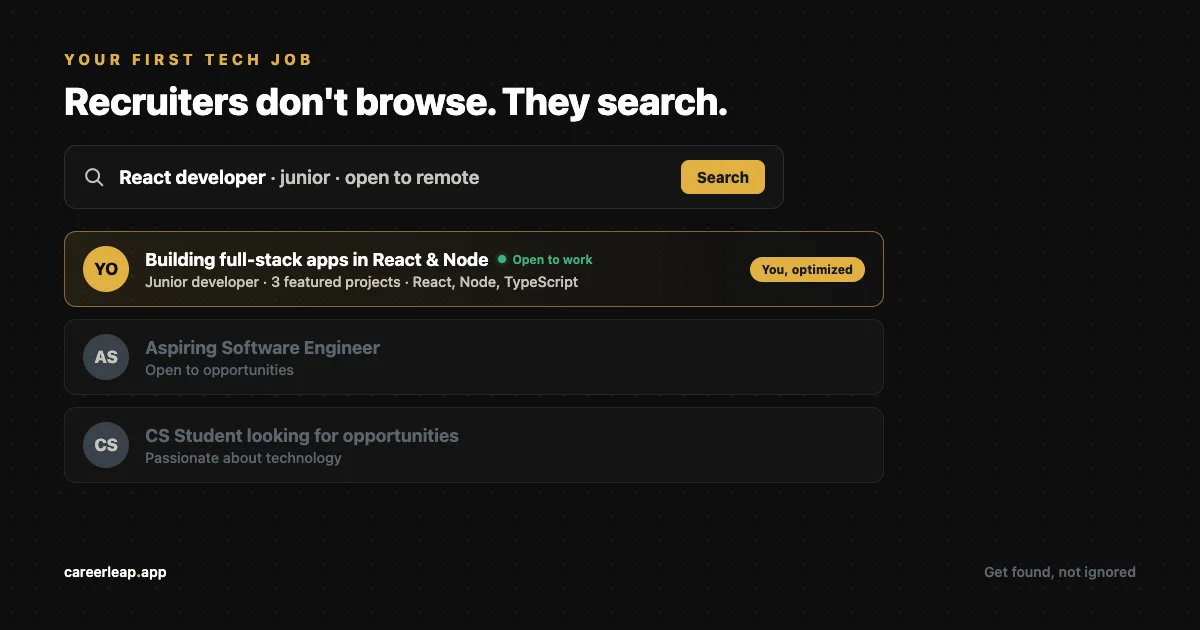
Recruiters don't browse profiles at random. They search.
They type in skills, locations, job titles, and keywords. LinkedIn's algorithm then surfaces profiles that match. If your profile doesn't have the right words in the right places, you won't show up.
This is easier to fix than most people think.
Go to the job listings you want. Look at the skills and keywords they repeat. Then make sure those exact words appear in your headline, About section, and Skills list.
The Skills section especially. Recruiters filter by skills constantly. If you know React but it's not listed, you're invisible to anyone searching for React developers.
A few other things worth doing:
- Turn on "Open to Work" and set it to recruiters only
- Add your location even if you're open to remote
- List every relevant technology you've worked with, even in side projects
- Get at least 5 skills endorsed by connections
None of this takes more than an hour. But most developers skip it entirely and wonder why no one reaches out.
These four things compound over time. A strong profile gets found. Consistent posts keep you visible. Real engagement turns visibility into relationships. Keywords make sure you show up in the first place. None of them work in isolation. All four together is where the results come from.
Which of these are you currently doing?